
Cheongdam Tune Face | The Meaning of Tune Blue, Handpiece, and Energy Settings
2026-10-27
Contents
How is Tune Blue different from other Tune Face programs?
Tune Blue is a high-frequency lifting treatment utilizing the Accent Prime's Tune Face handpiece. It delivers thermal energy to the skin and tissues to induce changes related to elasticity, particularly in areas of the face where elasticity has decreased, such as the cheeks and jawline.
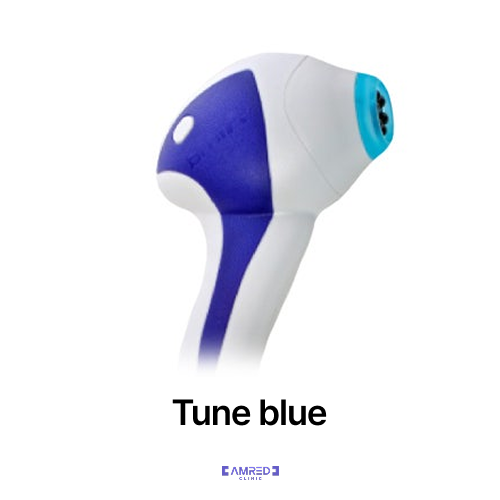
The Accent Prime has various handpieces and functions, and the program names may differ depending on the clinic. To understand the Tune Blue program, it is necessary to distinguish between the energy methods used and the actual application areas. Explaining the functions and intended applications rather than just the name allows consumers to compare treatments.
Initially, it is advisable to check which areas and purposes the Tune Blue is planned for, rather than focusing on complex device specifications. Treatments with the same name may vary in composition from clinic to clinic.
The actual applicator and intended purpose determine the treatment's content more than the program name distinguished by color.
Why is temperature important in Tune Blue lifting?
Tune Blue uses high-frequency energy to deliver heat to the tissues. The process by which tissues respond to heat is connected to the principles of skin elasticity management and affects not only the immediate sensations after treatment but also any changes that may occur later.
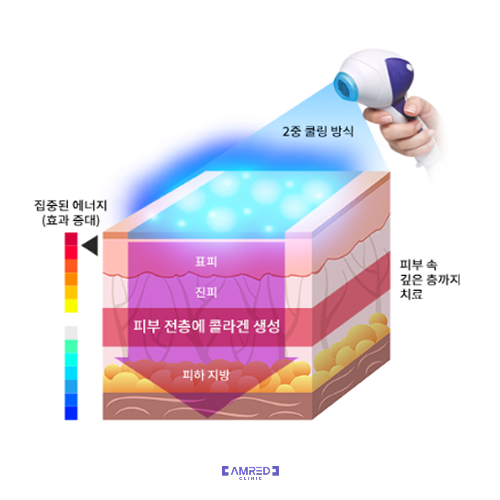
What needs to be considered here is not just the temperature reached. The response can vary depending on the range of heat delivered, how long it is maintained, and the condition of the skin when receiving energy. Even in the same area, if the thickness of the skin and subcutaneous fat differs, the energy application plan may change.
For example, when managing decreased elasticity in the cheeks versus changes in contour like the jawline, it is not necessary to set the management range and heat delivery conditions the same. It is important to maintain a balance that considers the necessary thermal response while not giving excessive stimulation to the skin.
Does a higher temperature improve the effects of Tune Blue?
Just because a high temperature is observed during treatment does not mean that collagen production or lifting effects will be greater. The skin tissue's response varies based on the depth and duration of energy delivery, the treatment area, and the individual's skin condition.
Claims that reaching a specific temperature will yield the same results for everyone should be viewed with caution. The temperature measured at the skin surface cannot be equated with the reactions occurring within the tissues, and high heat does not necessarily mean sufficient elasticity improvement.
In fact, excessive thermal stimulation can increase the risk of discomfort or burns. In Tune Blue, it is more important to deliver energy under appropriate conditions to the necessary areas rather than simply increasing the numbers.
Why does the sensation of heat differ even with the same Tune Blue treatment?
The sensation of heat experienced during Tune Blue treatment can vary from person to person and even among different areas of the same person's face. This is due to differences in skin thickness and sensitivity, the amount of subcutaneous fat, and the treatment area. Even with the same settings, the perceived temperature may not be the same.
For example, the conditions under which the handpiece contacts the skin and the treatment range differ between relatively wide areas like the cheeks and the contoured areas of the jawline. If the skin is sensitive or if the person has recently undergone other energy treatments, that history should also be considered when determining application conditions.
A weak sensation of heat does not mean there is no effect, nor does a strong sensation indicate a better treatment. It is advisable to inform the medical staff if discomfort or excessive heat is felt during the treatment and to confirm that the procedure is being conducted according to one's skin condition.
Do the effects of Tune Blue appear immediately after treatment?
After Tune Blue treatment, the skin may feel temporarily firm or tight. However, it is not accurate to equate the immediate sensations after treatment with subsequent changes in skin elasticity.
The reactions of the tissues induced by high-frequency energy may manifest over time, so it is advisable not to judge the final results solely based on how the facial contours appear immediately after treatment. Conversely, just because there are not significant changes right after treatment does not mean there will be no changes later.
Temporary redness, swelling, and heat may occur in the treatment area, and if these symptoms persist for a long time or if pain increases, medical attention should be sought. When monitoring progress, it is helpful to observe changes in skin elasticity and facial contours under the same lighting and expressions.
How does AMRED plan the application range and energy for Tune Blue?
AMRED does not base its plans solely on how hot the skin has become during the Tune Blue treatment. It first examines where the loss of elasticity in the cheeks and jawline is most pronounced, as well as the thickness of the skin and existing volume.
For example, the desired changes in the face differ between sufficiently voluminous cheeks and already sunken side cheeks. Rather than managing the entire face with the same intensity, it is necessary to distinguish between areas that need to maintain volume and those that require elasticity improvement. Recent history of other lifting treatments can also be considered when determining the treatment range and conditions.
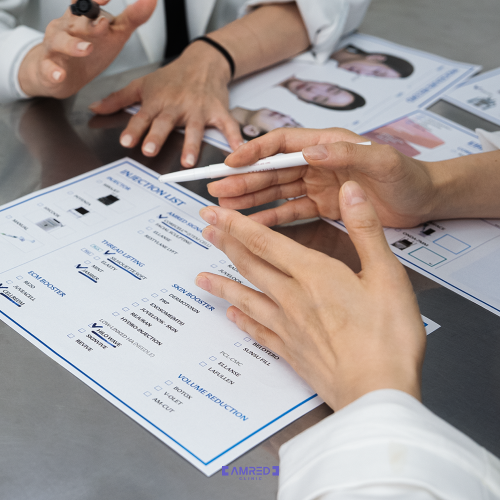
AMRED plans the application areas and conditions for Tune Blue by examining the state of the skin and tissues, the details of facial contours, and overall balance based on 4D aging resolution. The key is not the high temperature itself, but the management of thermal energy and treatment range tailored to individual conditions.
4D refers to AMRED's own perspective on aging analysis and treatment design, and does not signify an independent medical diagnostic classification or a single treatment name.
Actual treatment plans may vary based on the medical staff's assessment and individual conditions.
For booking inquiries, please contact us on WhatsApp.