
Cheongdam Thermage | How Long Does Thermage Last? Individual Differences and Management Standards
2026-10-21
Contents
Reasons Why It's Difficult to Answer How Long Thermage Lasts
When looking into Thermage, the question 'How long does the effect last?' is always asked. This is crucial information for planning costs and treatment cycles.
However, it's challenging to set a single date for the duration that applies to everyone. Factors such as the original skin elasticity, the type of wrinkles, the treatment area and scope, and the aging process over time can all affect perceived changes.
For example, even if two people receive the same Thermage treatment, one person concerned about fine lines around the eyes and another focusing on the overall elasticity of the cheeks will have different criteria for judging whether 'the effect is maintained.' One will look at how much less pronounced the fine lines are, while the other will observe how much the overall looseness of the skin has changed.
Therefore, rather than just checking the average duration, it is more helpful to determine what changes are most concerning before the treatment and at what point to check the condition.
Why Are Changes Immediately After Treatment Different from Changes Months Later?
Thermage is a treatment that expects changes in skin elasticity based on thermal reactions from high-frequency energy. While the skin may feel slightly firmer immediately after treatment, there are parts that may change over time depending on the tissue's response.
Thus, it's difficult to judge the treatment results based on a single photo taken the next day. Temporary redness or swelling after treatment can make the appearance look different from usual. Conversely, feeling tightness immediately after does not mean that this state will be maintained.
To check the progress, you should first recall what aspects you aimed to improve when planning the treatment. For example, if you wanted to improve fine lines, observing the skin around the eyes under the same expression and lighting would be helpful. If you wanted to check changes in jawline elasticity, recording your profile from the same angle would be beneficial.
In this way, it is more accurate to separate the questions of 'when does it become visible' and 'how long do the visible changes last' when discussing Thermage.
Reasons for Different Perceptions of Duration Even with the Same Treatment
Individuals with thin skin and many fine lines have different pre-treatment conditions compared to those with relatively thick skin and decreased elasticity. Even if the same thermal energy is delivered, it is difficult to say that the skin condition and expected changes are the same.
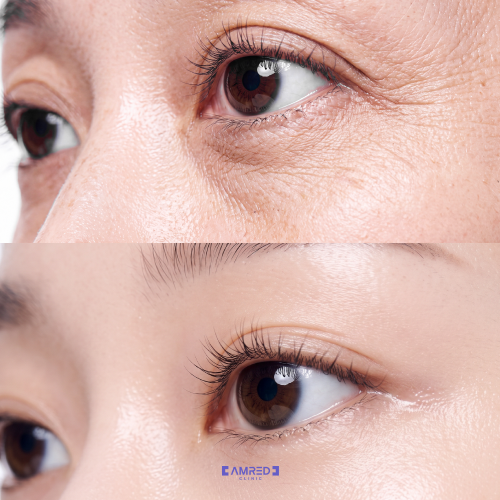
Moreover, the skin thickness and movement around the eyes, cheeks, and jawline differ. This is why it's challenging to compare wrinkles observed in frequently animated areas with the overall elasticity of the face using the same standard. If the treatment areas differ, the point at which one feels 'the effect seems to have disappeared' can also vary.
Furthermore, natural aging continues even after treatment. As time passes, new skin changes may appear, so it is necessary to distinguish between the initial issues you wanted to improve and new concerns that arise.
For instance, even if your skin feels looser than before, it is more rational to examine how the current condition differs from before the treatment rather than concluding that the effects of the previous treatment have suddenly disappeared.
Should You Undergo Repeated Treatments to Extend the Duration?
If you have received Thermage once, should you set the date for the next treatment in advance? Not necessarily. The decision to undergo repeated treatments should be based on what changes you experienced previously and what concerns remain now.
For example, if initially, both fine lines and skin elasticity were concerns, but upon reviewing the progress, you find that the loss of volume in your face is more concerning than the fine lines, it may be more important to revisit the root cause of your concerns rather than repeating the same treatment.
Conversely, if the purpose of the previous treatment was clear and your skin condition has changed, you can plan the necessary scope and timing again. However, increasing the number of treatments does not necessarily mean that the effects or duration will increase proportionally.
Managing the duration is more about confirming the current skin changes and desired goals to decide on the next plan rather than mechanically repeating the schedule.
What Should You Pay Attention to in Post-Treatment Care?
Immediately after treatment, your skin may feel temporarily sensitive. During this time, it is advisable to follow the care methods provided by the medical institution and avoid actions that may strongly irritate the skin.
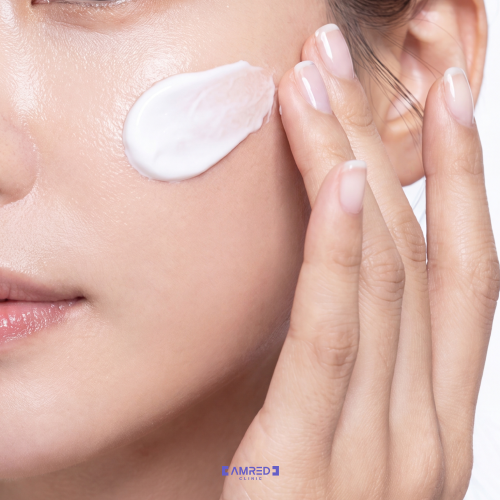
In daily life, consistent practices such as sun protection and basic moisturizing are important. This is because if the skin surface is dry and sensitive, even light irritation can feel uncomfortable. However, it is difficult to definitively say that specific cosmetics or lifestyle habits will extend the duration of Thermage as expected.
For example, if there is temporary heat or sensitivity remaining in the skin, even products you usually use may feel irritating. In this case, rather than excessively increasing the care steps, it is better to adjust your usual care methods according to your skin condition and the guidance of medical professionals.
If redness or pain persists or unexpected reactions occur, do not dismiss it as a simple recovery process; instead, consult the medical institution.
Why Does AMRED Examine 'Durability' in 4D?
The DURABILITY aspect of the 4D that AMRED refers to means considering not only the current skin condition but also how to observe changes after treatment and plan subsequent care. It does not guarantee that the effects will last long.
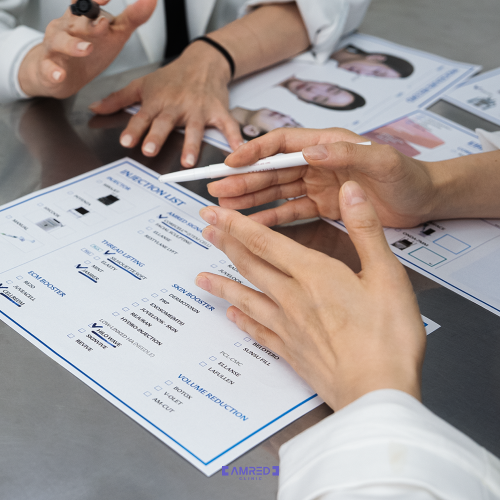
For example, if you are concerned about both fine lines around the eyes and looseness of the skin on the jawline, it is necessary to distinguish what goals you set for each rather than evaluating all changes by the same standard at once. Connecting the expected changes before treatment with the actual sensations after treatment will help you formulate a more specific care plan.
AMRED explains the direction of current concerns and progress checks based on the 4D criteria of skin density, detail, design, and durability. Actual treatment plans and subsequent care will be determined based on the medical professionals' evaluations.
If you are curious about the duration of Thermage, in addition to asking 'How many months does the treatment last?', consider 'What changes should I use as a standard to judge whether the effects are maintained?'
4D is AMRED's own perspective on aging analysis and treatment design, and does not refer to an independent medical diagnostic classification or a single treatment name.
Actual treatment plans may vary based on the medical professionals' evaluations and individual conditions.