
Cheongdam Thermage | What is Thermage FLX? From Principles to Effects, Pain, and Considerations
2026-10-21
Contents
What skin concerns is Thermage FLX used for?
When you look in the mirror and notice that your facial contours haven't changed significantly, but your skin feels less firm than before, or if fine lines around your eyes linger after smiling, you may become interested in skin elasticity management. At this point, Thermage FLX is often compared.
Thermage FLX is a non-invasive treatment that delivers monopolar radiofrequency (RF) energy to the skin and subcutaneous tissue. Instead of physically pulling the skin, it transmits thermal energy to the tissue, expecting changes related to elasticity and wrinkles as a result.
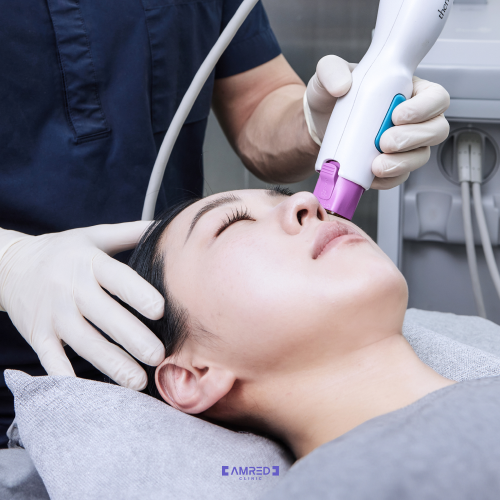
However, the expression 'the face looks saggy' can have various causes. The skin itself may have thinned and loosened, or the volume in the cheeks may have decreased, making the nasolabial folds appear deeper. An increase in volume under the chin can also make the jawline look heavier. Even if the concerns appear similar on the surface, it doesn't mean that Thermage is the solution for all situations.
Before considering Thermage, it is helpful to distinguish whether the skin has generally lost firmness, if specific areas appear sunken, or if the changes in contour are more significant than elasticity. This understanding can clarify the purpose of the treatment.
The principle of how radiofrequency energy acts on the skin
Thermage transmits monopolar radiofrequency energy to generate heat in the skin tissue. The heat delivered to the tissue affects collagen fibers and can induce changes related to the tissue remodeling process. Based on this reaction, improvements in skin elasticity and wrinkles are expected.
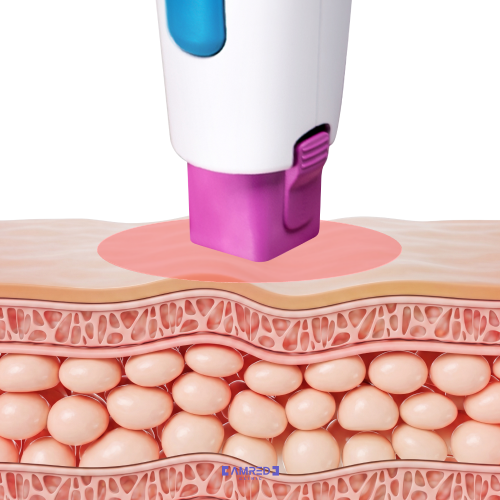
It is important to note that the method of delivering heat and the actual time it takes for the skin to change are not the same. Immediately after the treatment, the skin may feel temporarily firm, but the tissue's response can take time to manifest. Therefore, it is difficult to evaluate the immediate sensation of tightness and the skin's condition weeks later using the same criteria.
Additionally, just because Thermage is said to 'create collagen' does not mean it directly fills in lacking volume. For instance, if the reason for a flat appearance in the cheekbones is volume loss, managing skin elasticity alone may not be sufficient to restore the desired three-dimensionality.
Thus, it is crucial to understand specifically what concerns you are trying to improve, and what areas and goals the radiofrequency is being applied to, rather than focusing solely on the term collagen.
How do Ultherapy and Thermage differ in their lifting methods?
Ultherapy and Thermage are often compared, but their mechanisms of action are not the same. Ultherapy Prime focuses micro-focused ultrasound at specific target depths to induce tissue response, while Thermage FLX delivers heat to the tissue through monopolar radiofrequency.
Therefore, it is difficult to compare the two treatments with a single question of 'which is stronger.' For example, concerns about sagging skin under the jawline and thinning skin around the eyes with increased fine lines may both lead to a search for lifting solutions, but the necessary approaches may differ.
Conversely, if the goal is merely to tighten or contract the skin in a sunken cheek state, the results may not meet expectations. This is why it is essential to distinguish between decreased skin elasticity, volume loss, and fat distribution.
It does not mean that a person must receive both Ultherapy and Thermage together. Depending on the core of the concern, one treatment may be considered, or a different approach may be needed first. A detailed comparison of the two devices can be found in a separate lifting comparison column.
When is Thermage suitable, and when is a different approach needed?
One reason to consider Thermage is when the skin feels generally loose or when there is an increase in fine lines.
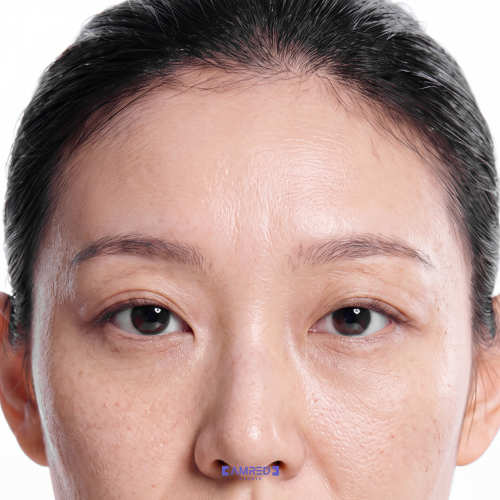
For example, if makeup settles into fine lines over time, or if thin lines that appeared when smiling linger even after relaxing your expression, you may feel the need for elasticity management.
However, even with wrinkles around the eyes, the approach may differ depending on whether the primary issue is the movement of expression muscles or the thinning and dryness of the skin. It is difficult to explain the same jawline concern with one treatment if the skin has loosened versus if there is excess fat causing the contour to blur.
Especially in areas like the cheeks or temples, where volume appears lacking, it is necessary to distinguish between the goal of tightening the skin and that of supplementing volume. There are situations where not choosing Thermage may be more rational.
Rather than judging suitability based solely on a specific age group or the phrase 'the entire face,' it is better to examine what changes are currently occurring and how those changes can be addressed.
Important information regarding pain, recovery, and timing of effects
During the Thermage procedure, various sensations can occur, ranging from warm heat to brief sharpness, as radiofrequency energy is delivered. The experience may vary depending on the area, energy settings, and individual sensitivity.
After the procedure, temporary redness, swelling, and tenderness may occur, and in rare cases, unwanted skin reactions may appear.
The timing of effects is also difficult to determine on a specific day. It is essential to understand the difference between immediate changes and the process of skin tissue responding over time. It is not appropriate to immediately conclude that there is no effect if you do not feel a significant difference the day after the treatment, nor is it correct to define the final result based solely on the immediate tightness.
Another common question is how often treatments should be received. The interval for repeat treatments should be determined by reviewing skin condition, previous responses, and treatment goals, as the same cycle cannot be applied to everyone.
Therefore, before the procedure, it is essential to confirm the expected timing of changes, pain management methods, and post-treatment precautions.
Criteria for designing Thermage FLX treatments at AMRED
AMRED pays attention to the fact that even with the same loss of elasticity, skin condition and structural changes in the face can differ.
For example, a person with increased wrinkles around the mouth and another with decreased volume in the cheekbones leading to a more pronounced mouth contour may both express concerns about 'aging,' but the necessary management directions may differ.
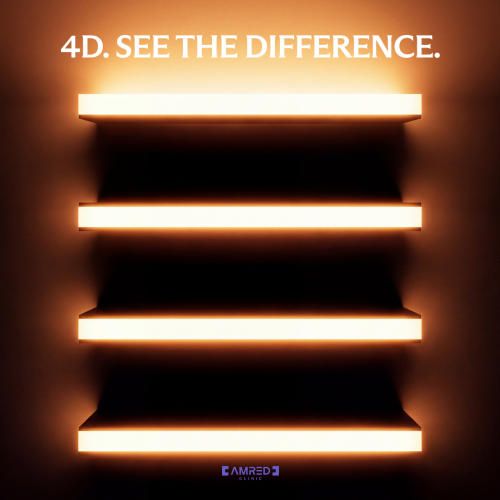
To examine this, AMRED introduces the 4D framework, which looks at the four depths of the skin from the perspectives of density, detail, design, and durability. This does not mean that the number of shots or effects are judged by a single device.
When planning Thermage, it is essential to first determine whether the primary issue is loss of skin elasticity or if changes in volume, fat, and facial contours are also at play. This way, you can see if the desired changes align with the treatment method.
More important than choosing a well-known device is to clearly understand what issues you want to manage on your face. Based on this, AMRED guides the medical staff's consultations and treatment plans.
4D is AMRED's self-defined perspective on aging analysis and treatment design, and does not refer to an independent medical diagnostic classification or a single treatment name.
Actual treatment plans may vary based on the medical staff's consultations and individual conditions.