
Cheongdam Dermatology | What are the differences between Sculptra and Juvelook Volume, and which treatment is suitable?
2026-10-29
Contents
What are the differences between Sculptra and Juvelook Volume?
Sculptra and Juvelook Volume are both treatments that stimulate collagen production in the skin to improve the lack of volume in the face. They can be considered when the facial contours are diminished due to aging, such as when the cheeks appear hollow or the volume in the temples decreases.
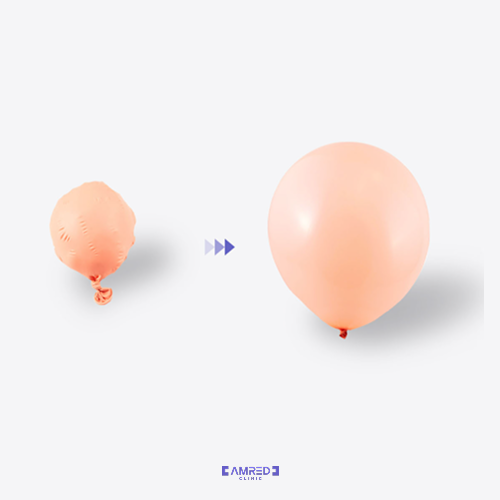
Both treatments share the commonality of inducing gradual volume changes through tissue reactions to the injected ingredients. This differs from the method of creating shape through the volume of the injected gel, as seen with hyaluronic acid fillers.
However, Sculptra is based on PLLA, while Juvelook Volume is based on PDLLA and hyaluronic acid, leading to differences in the structure and formulation of the ingredients. These characteristics can also affect the process of preparing and injecting the actual product, as well as considering the tissue response after the treatment.
Both products can be used to improve facial volume, making it difficult to categorize one product as suitable for larger volumes and the other for smaller volumes.
While Sculptra and Juvelook Volume both improve volume through collagen production, the treatment methods may vary depending on the ingredients and product characteristics.
How do the ingredients and collagen production principles of the two products differ?
The main ingredient of Sculptra is PLLA (Poly-L-Lactic Acid). The principle involves injecting PLLA microparticles into the skin, which induce a reaction in the surrounding tissue, leading to the gradual formation of new collagen that compensates for volume.
Sculptra is diluted with sterile injectable water before the procedure, and the distribution of the injected PLLA particles and tissue response are considered during the treatment. Rather than achieving the desired volume immediately upon injection, it expects changes in volume through collagen formation over time.
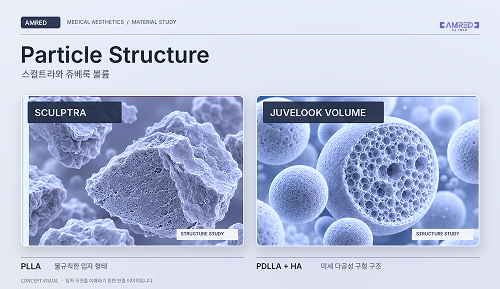
In contrast, Juvelook Volume is a product that combines PDLLA (Poly-D,L-Lactic Acid) and HA (hyaluronic acid). PDLLA also induces collagen production in the surrounding tissue, characterized by the application of porous mesh-like microparticles.
The differences between the two products lie in the structure of the ingredients PLLA and PDLLA, the presence of hyaluronic acid, and the characteristics of the microparticles. Due to these differences, the preparation methods and injection conditions for each product must be considered separately.
However, the difference in ingredients does not necessarily mean that one product is superior in collagen production effects. Both products induce collagen formation, but actual volume changes can vary depending on the injection site, amount used, and individual tissue conditions.
Where can Sculptra and Juvelook Volume be applied?
Volume loss in the face can occur in various areas, such as the cheeks, temples, and below the cheekbones. Depending on which area has lost volume, different changes can occur in the facial contours and dimensions.
For example, if the volume in the cheeks decreases, the midface may appear flat, or the shadows in the nasolabial area may appear deeper. Conversely, if the temples are hollow, the contours of the face from the forehead to the cheekbones may change, and if there is insufficient volume below the cheekbones, the facial curves may become more pronounced.
Sculptra and Juvelook Volume can be used to address these facial volume losses and improve wrinkles. However, even within the same area, the required injection locations and ranges may differ based on skin thickness, existing fat distribution, and the degree of hollowness.
In particular, simply filling in areas that lack volume is not necessarily the way to create natural facial lines. The required volume location and amount may differ depending on whether it is necessary to enhance the dimensionality of the cheeks or to soften the curves below the cheekbones.
Additionally, in areas where the skin is thin or where previous injection treatments have been performed, the characteristics of the product and the existing tissue condition must be considered together.
When considering the application of both products, it is important not only to determine where they can be injected but also to assess how much volume needs to be supplemented in which locations to maintain the overall balance of the face.
Do Sculptra and Juvelook Volume have different timelines for visible effects?
Both Sculptra and Juvelook Volume are treatments that expect gradual changes through collagen production, so it is necessary to distinguish between the appearance immediately after injection and the changes that occur over time.
Immediately after the procedure, Sculptra may appear to have volume due to the injected diluted solution and temporary swelling. Subsequently, as moisture is absorbed and swelling subsides, the initial volume may decrease, and gradual changes will appear as collagen formation progresses.
Similarly, the state immediately after Juvelook Volume treatment is not the final result. After the injection process, temporary swelling and initial tissue reactions occur, and over time, collagen formation induced by PDLLA can affect volume changes.
Therefore, it is difficult to judge the final degree of volume improvement based solely on the volume changes immediately after the treatment for both products.
In actual clinical studies, the effects of both products were observed after multiple injections, and the degree of improvement in nasolabial folds was confirmed to change over time.
However, the speed of collagen formation and the timing of perceiving effects can vary from person to person. The number of required treatments may also differ based on the degree of volume loss, the application area, and changes observed after previous treatments.
Both Sculptra and Juvelook Volume are treatments that expect changes in volume over time, and the actual degree of improvement and duration may vary based on the characteristics of the products and individual tissue responses.
What reactions can occur after Sculptra and Juvelook Volume treatments?
Both Sculptra and Juvelook Volume involve injecting products into the skin and subcutaneous tissue, so redness, swelling, bruising, and tenderness may occur immediately after the procedure. These reactions generally subside over time, but they can vary depending on the individual's skin condition and injection site.
Both products contain microparticles that induce collagen production, so the tissue reactions that appear over time should also be considered.
For example, the temporary swelling that makes the skin appear puffed immediately after injection and the hard lumps or nodules that may be felt at the injection site after a certain period are different reactions.
These nodules may be related to factors such as the distribution of the product, injection depth, and tissue inflammatory responses.
Therefore, it is important to consider the preparation process suitable for the characteristics of the product, the appropriate injection locations, and the amounts used.
Additionally, in facial injection procedures, the anatomical structures of blood vessels and surrounding tissues must be adequately considered. Although rare, serious complications such as vascular occlusion can occur, and if severe pain, skin color changes, or visual disturbances occur during or immediately after the procedure, immediate medical evaluation is necessary.
Since Sculptra and Juvelook Volume have different ingredients and formulations, the responses to adverse reactions may also vary according to the characteristics of the products.
Both treatments expect long-term changes due to collagen formation, so it is necessary to consider the characteristics of the products, injection sites, previous treatment history, and subsequent tissue responses.
How does AMRED choose between Sculptra and Juvelook Volume?
AMRED does not simply focus on filling in the lacking areas during Sculptra and Juvelook Volume treatments; it also examines where volume loss has occurred on the face and how these changes affect the overall contours.
For instance, if the volume in the cheeks has decreased, making the midface appear flat, and if the area below the cheekbones has hollowed out, the required volume locations and ranges will differ.
Even if volume loss appears in the same area, appropriate injection methods and amounts may be reviewed differently based on the condition of the skin and fat layers, as well as whether previous injection treatments have been performed.
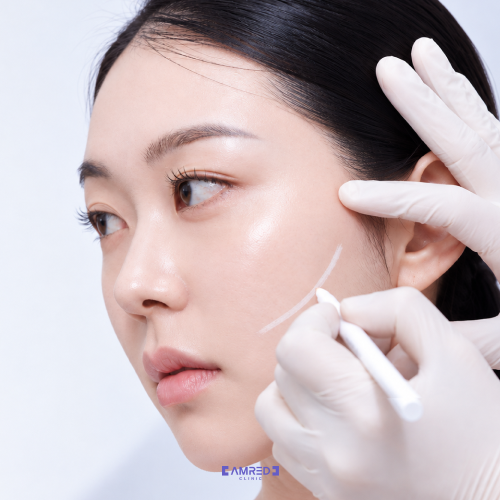
To distinguish these differences, AMRED utilizes a 4D aging resolution as a clinical standard. This involves considering the density and volume of the skin and tissues (DENSITY), detailed aging changes (DETAIL), overall facial balance (DESIGN), and changes over time and durability (DURABILITY).
Based on this, the locations and ranges that require volume supplementation are planned, and the characteristics of Sculptra and Juvelook Volume, as well as injection conditions, are considered to determine the individual treatment direction.
In particular, since both products may show changes over time due to collagen formation, it is essential to consider not only the volume immediately after treatment but also the subsequent changes in facial contours and overall harmony.
AMRED's 4D approach focuses on closely examining the patterns of individual volume loss and facial balance to select the appropriate treatment between Sculptra and Juvelook Volume and design the volume according to the necessary areas.
4D is a proprietary aging analysis and treatment design perspective defined by AMRED and does not refer to an independent medical diagnostic classification or a single treatment name.
Actual treatment plans may vary based on the medical staff's evaluation and individual conditions.