
AMRED Clinic | Why Do Neck Wrinkles Form, and Does the Management Change Depending on the Type of Wrinkle?
2026-10-29
Contents
Why Do Neck Wrinkles Form?
Horizontal wrinkles or changes that make the skin appear thin and wrinkled on the neck can occur regardless of age.
Neck wrinkles are influenced by various factors including skin aging, congenital skin structure, repetitive neck movements, and UV exposure.
In particular, horizontal neck wrinkles can appear even at relatively young ages. Lines may form where the neck skin naturally folds, and repeated movements such as bending the head or neck can make existing wrinkles more pronounced.
On the other hand, neck wrinkles that appear with age are the result of a combination of decreased skin elasticity, changes in collagen, and muscle movements in the neck. As the skin loosens, fine wrinkles may increase, or the contours of the muscles at the front of the neck may appear more pronounced vertically.
The neck is connected to the face, but there are differences in skin thickness, movement, and muscle structure. Even if the elasticity of the face is relatively well maintained, horizontal wrinkles or sagging skin on the neck may become noticeable first.
Thus, neck wrinkles are not simply changes that occur with aging; they can appear in various forms depending on the causes of wrinkle formation and the condition of the tissues.
What Are the Differences Between Horizontal Neck Wrinkles, Vertical Wrinkles, and Fine Skin Wrinkles?
Neck wrinkles can be broadly categorized into horizontal wrinkles, vertical muscle bands, and fine surface wrinkles associated with decreased skin elasticity.
Horizontal neck wrinkles are lines that appear horizontally on the front and sides of the neck. They are influenced by the natural folding of the skin and repetitive neck movements, and can appear from a young age depending on congenital skin characteristics. Initially, they may become pronounced when bending the neck, but over time, lines may remain even when the head is upright.
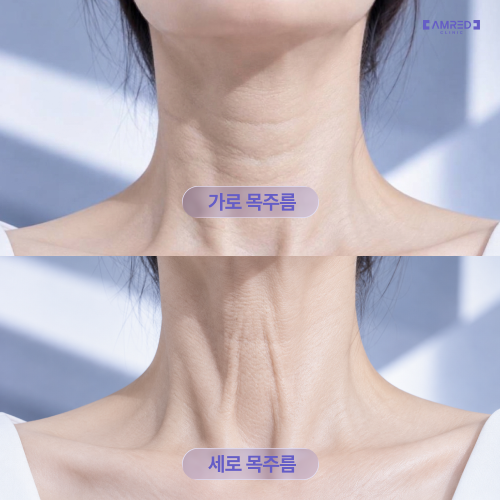
The vertical muscle bands that become prominent are related to the platysma muscle located at the front of the neck. The platysma is a thin muscle that spreads widely just beneath the skin of the neck and contracts when making facial expressions or tensing the neck. When the edges of the muscle become prominent vertically, it can appear as a long band at the front of the neck.
In contrast, fine wrinkles that appear densely on the skin surface or changes that cause the skin to fold thinly are closely related to the skin's elasticity, moisture levels, and photoaging due to UV exposure. As the skin loosens, fine wrinkles may increase across the neck, and in dry conditions, these lines may appear more pronounced.
These changes do not necessarily appear one at a time. Old horizontal neck wrinkles may appear alongside decreased skin elasticity, and vertical muscle bands may become prominent while sagging of the neck line occurs.
Reducing deeply established horizontal wrinkles, minimizing the movement of vertical muscle bands, and improving the overall elasticity of the skin each correspond to different treatment goals.
Can Neck Wrinkles Be Managed Only with Home Care?
The skin on the neck, like that on the face, requires basic care such as moisturizing and sun protection. In particular, the neck is often exposed to UV rays, but people may not apply enough sunscreen or moisturizer compared to their face.
If the skin is dry, fine surface wrinkles may become more pronounced. In such cases, using a moisturizer to reduce moisture loss and manage the skin barrier can help alleviate the appearance of fine wrinkles emphasized by dryness.
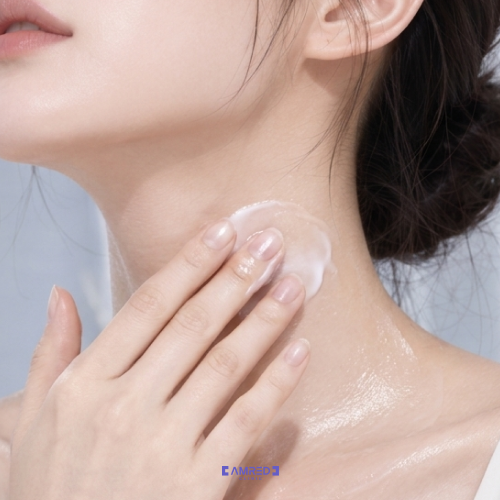
Sun protection also helps prevent the loss of elasticity in the neck skin. Prolonged UV exposure can promote changes in tissues involved in skin elasticity, such as collagen and elastin, so it is advisable to manage not only the face but also the neck.
Lifestyle habits can also have some impact. Maintaining a posture that involves bending the head for long periods can repeatedly create folds in the neck skin, which can further emphasize existing horizontal wrinkles. However, this posture alone does not cause all neck wrinkles.
Deeply established horizontal neck wrinkles or vertical wrinkles caused by muscle movement are unlikely to improve sufficiently with just moisturizing or posture correction. Additionally, if skin elasticity has significantly decreased and the neck has become loose overall, there are limits to what can be achieved through cosmetics.
Home care is a basic method for managing dryness and UV damage to the neck skin, and it serves a different role than treatments that directly improve the depth of old wrinkles or muscle movement.
What Treatments Can Be Considered Based on the Type of Neck Wrinkles?
Neck wrinkle treatments can be categorized into methods that directly address skin wrinkles, methods that regulate muscle movement, and methods that improve skin elasticity.
In cases where horizontal neck wrinkles are deeply established, injection treatments using hyaluronic acid may be considered depending on the condition of the skin and tissues in the wrinkled area. This method aims to complement the shape of the sunken areas to reduce the prominence of the lines.
However, because the neck has a lot of movement and the skin is thin, the results can vary depending on the characteristics, depth, and amount of the injected product. In particular, old horizontal wrinkles may not completely disappear with just one treatment, as the skin may already have formed grooves.
If the concern is with vertical muscle bands that are prominent at the front of the neck, botulinum toxin treatments that regulate the contraction of the platysma muscle may be utilized. This principle temporarily weakens muscle movement to alleviate the prominent vertical bands when tension is applied to the neck.
However, this method does not uniformly improve all deeply established horizontal wrinkles. This is because the structures involved in the formation of vertical muscle bands and horizontal neck wrinkles are different.
If the neck skin has thinned and lost elasticity, energy-based treatments such as radiofrequency or ultrasound, as well as lasers that induce skin regeneration, may be considered. These treatments aim to promote collagen remodeling or improve skin elasticity depending on the depth of application and energy delivery method.
However, improving the elasticity of the neck skin and addressing already deeply established horizontal wrinkles are different goals. Even if there are changes that make the skin overall firmer, it does not mean that the long-standing horizontal lines will be alleviated to the same degree.
When various types of neck wrinkles appear together, it may also be considered to apply different treatments to the necessary areas or to proceed in stages.
What Should Be Considered in Neck Wrinkle Treatments?
The neck has relatively thin skin and a lot of movement, and various structures such as the platysma muscle, blood vessels, and nerves are located beneath the skin. Therefore, the depth and range of application, as well as the expected adverse reactions, can vary depending on the treatment method.
When using botulinum toxin to regulate the platysma muscle, care must be taken to ensure that other neck muscles are not affected. If the drug spreads to surrounding muscles, it can lead to decreased neck strength, swallowing difficulties, or changes in voice, so treatments must consider the position and function of the muscles.
In injection treatments, in addition to temporary bruising and swelling, issues may arise where the injected product clumps or becomes irregularly visible on the skin surface. Especially in thin neck skin, these changes can become visually pronounced depending on the injection site and product characteristics. Rarely, attention must also be paid to vascular-related complications.
Energy-based treatments such as radiofrequency or lasers can cause skin irritation, redness, and swelling, and risks such as burns or pigmentation changes should also be considered depending on the equipment used and energy settings.
Additionally, the anatomical structure varies in the front of the neck, such as under the chin and on the sides of the neck. Even equipment used on the face cannot be applied in the same way to the neck, so the applicable areas and treatment conditions for each device must be distinguished.
When planning to improve neck wrinkles, it is essential to consider not only the depth of the wrinkles and skin elasticity but also the function of the neck muscles and the safety of surrounding tissues. If symptoms such as difficulty swallowing or breathing discomfort occur after treatment, immediate consultation with medical staff is necessary.
How Does AMRED Differentiate and Manage Neck Wrinkles?
Neck wrinkles appear in different forms depending on the boundary between the face and neck, skin thickness and elasticity, and muscle movement in the neck. AMRED examines the depth and location of the wrinkles formed on the neck and considers the overall contour from the jawline to the neck when planning treatments.
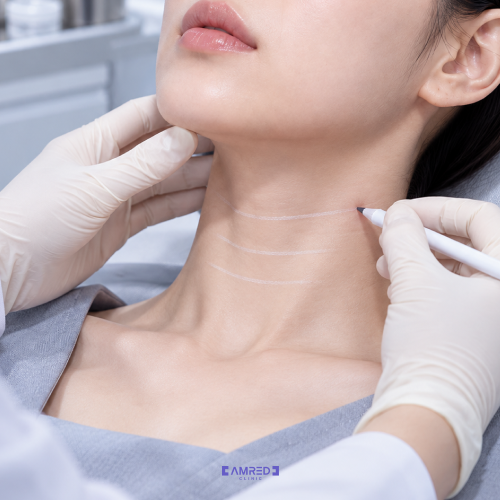
For example, if horizontal neck wrinkles have been deeply established from a young age, the focus will be on the depth of those wrinkles and the condition of the surrounding skin. Conversely, if the entire neck skin has thinned and lost elasticity, leading to an increase in fine wrinkles, the primary goal may shift to improving skin condition and elasticity rather than addressing individual wrinkles.
If the muscles at the front of the neck are prominent vertically, both the movement of the platysma and the shape of the neck line will be considered. In particular, if there is sagging of the jawline or changes in volume under the chin, the treatment plan may differ from managing neck wrinkles alone.
The criteria for examining these differences is AMRED's 4D Aging Resolution.
It considers the density and elasticity of the skin and tissues (DENSITY), detailed changes such as the depth and shape of neck wrinkles (DETAIL), the overall harmony from the jawline to the neck (DESIGN), and the expected changes and durability after treatment (DURABILITY).
Based on this, the necessary treatments and application ranges are planned according to whether to directly complement horizontal neck wrinkles, focus on improving skin elasticity, or regulate the movement of neck muscles. When multiple changes appear together, a combination of treatments tailored to each cause can also be considered.
Neck wrinkles require examination not only of the depth of the wrinkles but also of the skin condition, muscle movement, and the contour of the neck connected to the jawline to expect natural improvement.
4D is a proprietary aging analysis and treatment design perspective defined by AMRED and does not refer to an independent medical diagnostic classification or a single treatment name.
Actual treatment plans may vary based on the medical staff's examination and individual conditions.