
Cheongdam Dermatology | If You're Worried About Thin Skin Lifting and Cheek Hollowness, Check These Criteria
2026-10-22
Contents
Should You Avoid Lifting If You Have Thin Skin?
Many people worry that due to thin skin, fine lines are more visible and they want to improve elasticity, but they fear that their cheeks may look even more hollow after the procedure. However, just because the skin is thin does not mean that all lifting procedures should be avoided, nor can it be definitively stated that certain equipment is safe.
Especially for those who appear to have less cheek volume, there is a concern that 'if I get a lifting treatment, my face might look longer.' The first thing to do in this case is not to choose the equipment, but to distinguish between the areas that appear hollow and those that have decreased elasticity.
It is common to think that 'thin skin is dangerous for any lifting' or conversely 'it’s okay if done at low intensity.' The actual concerns should be explained not only by the thickness of the epidermis and dermis but also by the distribution of fat beneath and changes in facial shape due to previous treatments. Even with the same skin thickness, if there is less fat below the cheekbone and the skeletal structure is prominent, the hollowness may be more noticeable after the procedure. It is important to separate the questions of skin thickness and volume.
Just being aware that the skin is thin does not determine the cause. It is advisable to look at which angles in photos the hollowness is pronounced and whether there have been recent changes.
First, it is necessary to examine how the thickness of the skin, the distribution of facial volume, and the areas of concern are related to each other.
Are Thin Skin and Cheek Hollowness the Same Problem?
The thickness of the skin and facial volume are different characteristics. Even if the skin is thin, there can be sufficient volume, and conversely, even if the skin is thick, certain areas may appear hollow due to a decrease in fat or soft tissue.
For example, the thin skin around the eyes that shows fine lines is different from the shadow that appears under the cheekbone, making the side cheeks look hollow. They may appear simultaneously on the same face, but the management direction does not necessarily have to be the same.
When determining whether there is already cheek hollowness, it is important to not only look at frontal photos but also observe how hollowness appears with different expressions. Shadows created when smiling and hollowness that persists even when expressionless may not be the same issue. Recent rapid weight loss, previous treatments aimed at reducing fat, and history of fillers or collagen-stimulating injections are also important information to consider when interpreting the shape. It is difficult to recommend or exclude treatments based solely on the expression 'the skin is thin.'
It is difficult to accurately assess skin thickness with the naked eye. It is important to understand whether the skin is thin and dry, causing wrinkles to stand out, or if there is actually a reduction in volume.
Therefore, rather than connecting the idea that 'thin skin will cause hollowness after lifting,' it is better to first identify where the original volume is lacking.
Which Areas Are You Worried About for Cheek Hollowness?
In areas like the front cheeks and below the side cheekbones, where the original volume difference is likely to be noticeable, the purpose and scope of the treatment must be carefully defined. Defining the facial contour and filling in the lacking volume may be different goals.
The front cheeks and below the cheekbones may appear more hollow depending on the lighting or shadows in the photo. If hollowness is emphasized at specific angles compared to usual, remember when that appearance started and mention it during the consultation for reference in treatment direction.
The temples, side cheekbones, and front cheeks each have different tissue thickness and fat amounts. If the protrusion of the front cheeks decreases and the fat in the side cheeks is excessively reduced, shadows may appear more pronounced. At this point, it is important to distinguish whether the goal is to refine the jawline or to alleviate the hollowness of the cheeks. Even if the goal is to refine the facial contour, it is not necessary to reduce the volume of all areas equally.
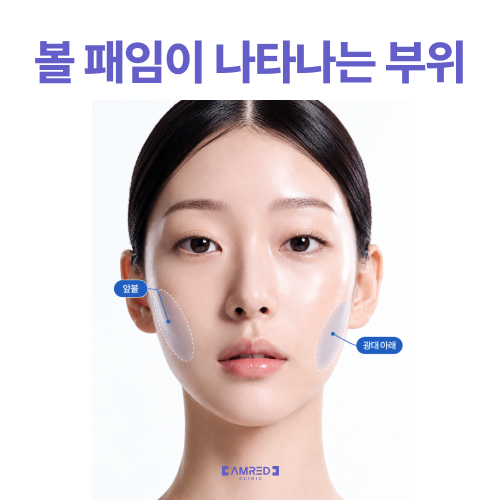
Simply emphasizing the jawline contour on a face that originally has less volume can change the overall impression in an undesired direction, so it is important to consider the harmony between the area of concern and the entire face.
During the treatment consultation, it is helpful to explain whether the current hollowness has been present for a long time, or if it has become more pronounced after recent weight changes or other treatments.
More Important Than the Type of Lifting is Treatment Design
Lifting that uses energy has different characteristics and application methods depending on the equipment. If you are worried about hollowness in one cheek, the medical staff must individually assess whether to avoid that area or consider different depths or ranges.
When listening to the treatment plan, it is better to directly point out and explain the areas of concern rather than just saying, 'Please make sure my cheeks don’t hollow out.' If you have felt hollowness after previous treatments or noticed changes in your face after weight loss, that history is also important information.
Radiofrequency, ultrasound, and lasers have different forms of energy and tissue responses, and even within the same equipment, the tips, depths, and application ranges can vary. Therefore, rather than requesting a weak treatment out of fear of hollowness, it is more helpful to specify which areas of hollowness you are concerned about for treatment design. How to evaluate unintended volume changes should also be included in the pre-treatment explanation.
Additionally, it is advisable to understand which areas the lifting energy will be applied to and why those areas are included or excluded. This helps in understanding the actual plan rather than just a simple statement of low output.
Simply applying lower energy because the skin is thin is not a sufficient principle. It is advisable to compare the desired changes, acceptable risks, and options not to undergo treatment.
Can Side Effects Be Completely Prevented?
Pre-treatment photography and consultation can help understand the current state and plan, but they do not guarantee the complete prevention of unwanted changes, including cheek hollowness.
All treatments have individual differences and the possibility of unexpected reactions. In particular, if one believes that results are guaranteed simply because a specific test was done before the treatment, expectations and reality may differ.
Methods such as precise photography or ultrasound to check tissues can help in planning, but the tests themselves do not guarantee results. After treatment, newly developed asymmetry or hollowness may need to be distinguished from changes in impression due to temporary swelling or actual tissue changes. It is also important to avoid concluding problems based solely on differences in lighting and expressions in photos, or conversely, ignoring changes.
If you notice asymmetry, pain, or volume changes that were not present before after treatment, it is important to consult with medical staff while checking photographic records. If there are significant concerns about the results, it may be wise not to rush into treatment and to consider other options.
If there is asymmetry, persistent sensory changes, or unexpected volume changes after treatment, it is important to be evaluated by medical staff rather than simply waiting for recovery.
What Does Amred Consider?
From Amred's 4D perspective, density and volume (DENSITY), and facial harmony (DESIGN) are criteria worth considering when distinguishing between thin skin and hollowness. Even with the same lifting, it is important to explain that desired results differ from person to person.
Amred's 4D DENSITY helps distinguish between areas with remaining volume and those lacking it, while DESIGN connects to considering the overall balance of the face. This does not mean recommending specific equipment for all thin skin. If improving elasticity is the goal, it is a perspective to examine the characteristics of the skin and fat layers, and to consider whether different treatment directions are needed for areas that are already significantly hollow.
Especially if you are worried about cheek hollowness, please also inquire about areas that should not be treated and areas where volume should be preserved.
4D is Amred's own perspective on aging analysis and treatment design, and does not refer to an independent medical diagnostic classification or a single treatment name.
Actual treatment plans may vary based on the medical staff's consultation and individual conditions.