
Fine Lines Around the Eyes in Cheongdam | Why Eye Cream May Not Be Enough
2026-10-29
Contents
Can fine lines around the eyes be managed with just eye cream?
When fine lines around the eyes start to appear, many people pay attention to using eye cream or moisturizing. In fact, when the skin becomes dry, fine lines can become more pronounced, but the wrinkles around the eyes are influenced by various factors, including not only moisture levels but also repetitive facial movements, loss of skin elasticity, and UV exposure.
The appearance of eye wrinkles can also vary based on their form. Wrinkles that appear around the outer corners of the eyes when smiling or squinting are closely related to the repetitive movements of the facial muscles. On the other hand, wrinkles that remain even when not making facial expressions may result from a combination of loss of skin elasticity and repetitive movements. If fine lines become more pronounced after washing the face or in dry environments, the skin's moisture levels may also be a contributing factor.
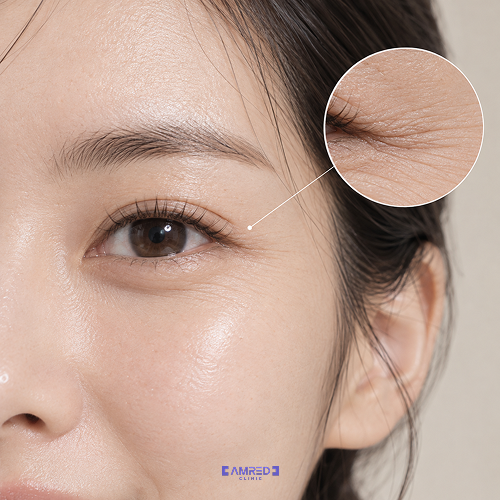
Fine lines that become pronounced due to dryness can be alleviated with moisturizing, but wrinkles formed by repetitive facial movements or loss of skin elasticity have limitations in improvement through moisturizing alone. This is why the management methods differ based on the form and causes of eye wrinkles.
How Do Dryness-Related Fine Lines Differ?
The skin around the eyes is thinner and has less oil secretion compared to other areas of the face, making it more prone to dryness. When the skin lacks moisture, its surface can become rough, making fine lines that usually go unnoticed more pronounced.
In particular, if the skin around the eyes feels tight after washing or if makeup products settle into the fine lines, the skin's hydration level may be a contributing factor. These fine lines can be visually alleviated with moisturizing management that provides sufficient moisture to the skin and reduces moisture loss.
Eye cream is a product used for this moisturizing management. However, it is not necessary to use a separate product labeled as eye cream; choosing a moisturizer suitable for the area around the eyes is also an option. Since the area around the eyes can be sensitive to irritation, caution is needed when selecting products if the skin reacts to fragrances or irritating ingredients.
Sun protection is also an important aspect of managing eye wrinkles. UV rays are a factor that affects the reduction of collagen and elasticity in the skin, so using sun protection products suitable for the eye area and sunglasses can help reduce changes caused by photoaging.
The areas that can be alleviated through moisturizing management are primarily the fine lines that become pronounced due to a lack of skin moisture. For wrinkles that have already deepened due to loss of skin elasticity or facial movements, it may be difficult to expect sufficient changes through moisturizing alone.
How Do Expression Lines Differ from Wrinkles at Rest?
Wrinkles that appear around the outer corners of the eyes when smiling or squinting are closely related to the movement of the orbicularis oculi muscle. This muscle acts when closing the eyes or making facial expressions, and when it contracts, the surrounding skin folds, creating wrinkles at the outer corners of the eyes.
Initially, wrinkles may only appear when smiling and disappear when the expression relaxes. However, as collagen and elasticity in the skin decrease, the skin's ability to return to its original state after being repeatedly folded weakens. As this process continues, some wrinkles may remain even when not making facial expressions.
In particular, the skin around the eyes is thin and experiences frequent movements. When combined with UV exposure and natural aging leading to decreased elasticity, expression lines can gradually become more pronounced.
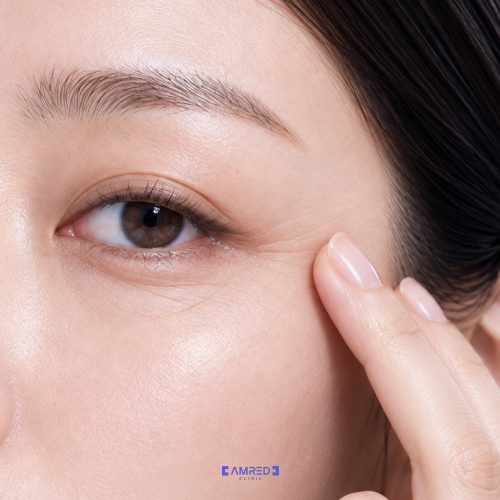
However, the wrinkles that radiate from the outer corners of the eyes and the fine lines that appear under the eyes differ not only in form but also in the factors involved in their occurrence. Wrinkles at the outer corners of the eyes are often primarily caused by the contraction of the orbicularis oculi muscle, while the fine lines under the eyes can be influenced by a combination of skin thickness, elasticity, and dryness.
Therefore, the wrinkles caused by facial movements and those resulting from changes in the skin itself may require different areas and methods for improvement.
What treatments can be considered for fine lines around the eyes?
Treatments for eye wrinkles vary depending on the causes of the wrinkles.
Typically, botulinum toxin to control the movement of facial muscles and energy-based treatments aimed at improving skin elasticity and texture can be considered.
For expression lines that deepen at the outer corners of the eyes when smiling, botulinum toxin is utilized. Botulinum toxin temporarily weakens the contraction of the muscles involved in wrinkle formation, reducing the extent to which the skin folds when making facial expressions.
However, if deep wrinkles remain even when there is no expression, simply reducing muscle movement may have limitations for improvement. This is because wrinkles that have already formed in the skin itself need to be considered alongside loss of elasticity and changes in the skin's surface.
If you are concerned about fine lines under the eyes or deterioration in skin texture, treatments tailored to the skin condition can be considered. Laser or radiofrequency treatments that promote skin regeneration are used for this purpose, and the depth of action and applicable areas around the eyes vary depending on the equipment used.
Additionally, if fine lines around the eyes become pronounced due to thinning skin, appropriate injection treatments may be considered based on the skin condition. However, the area around the eyes has a complex anatomical structure, and the thin skin means that not all injection products or equipment can be applied in the same way.
In particular, shadows created by hollowness under the eyes or protruding fat are separate issues from the fine lines on the skin's surface. In such cases, simply improving fine lines may not yield the desired changes.
The treatment plan for eye wrinkles varies depending on whether to control muscle movement, improve skin elasticity and texture, or consider structural changes based on the causes of the wrinkles.
What Precautions Are Needed for Treatments Around the Eyes?
The area around the eyes has thin skin and is close to various structures such as the orbicularis oculi muscle, tear glands, and blood vessels. Therefore, even for the same wrinkle improvement treatment, different precautions are needed compared to applying it to the forehead or cheeks.
When using botulinum toxin, considerations must be made regarding muscle action, injection sites, and dosage. If muscle movement is excessively suppressed to reduce wrinkles or if unintended muscles are affected, expressions may become unnatural, or the position of the eyelids may change. After treatments around the orbicularis oculi muscle, symptoms of dry eyes may also occur.
When using lasers or radiofrequency, the characteristics of the equipment and the range that can be applied around the eyes are important. In particular, laser treatments require appropriate eye protection for the area being treated, and without proper protective measures, there is a risk of eye damage when treating around the eyes.
Injecting products into the skin also requires consideration of potential adverse reactions based on the product and injection site, in addition to temporary reactions such as bruising and swelling. In cases where the skin around the eyes is thin, the contours or lumps of the injected product may become visually pronounced.
Additionally, if you have severe dry eye symptoms or a history of surgeries or treatments around the eyes, the applicable methods may vary based on your current condition.
Temporary redness or swelling may occur after treatment, but if severe eye pain, vision loss, or unexpected changes in vision occur, immediate medical evaluation is necessary.
Treatments around the eyes need to consider not only the effectiveness of improving wrinkles but also the naturalness of expressions, the function of the surrounding tissues, and the safety of the procedures.
How does AMRED manage fine lines around the eyes?
While eye wrinkles appear as changes in a small area, the treatment methods differ based on the location and causes of the wrinkles. AMRED distinguishes the detailed aging changes around the eyes and plans treatments considering the harmony with the surrounding skin and expressions.
For example, if deep wrinkles form at the outer corners of the eyes when smiling, the possibility of applying botulinum toxin can be reviewed considering the movement of the orbicularis oculi muscle. In this case, the scope of application is determined by considering not only wrinkle improvement but also the expression when smiling and the function of the surrounding muscles.

On the other hand, if there are fine lines under the eyes and a decrease in skin elasticity, management suitable for the skin condition may be needed rather than controlling the movement of the facial muscles. Depending on the degree of skin thinning, the depth of fine lines, and the condition of the surrounding tissues, the possibility of treatments for skin regeneration or elasticity improvement is reviewed.
AMRED's 4D aging-analysis framework serves as a standard for examining these detailed changes around the eyes. It considers fine changes in the depth of fine lines and skin texture (DETAIL), the condition of the skin and tissues (DENSITY), the overall expression and balance of the face (DESIGN), and changes over time (DURABILITY).
Based on this, we distinguish between changes that can be alleviated through moisturizing management and those that can be expected to improve through treatments, planning the types and scopes of treatments according to the actual needs of the areas.
Rather than simply eliminating eye wrinkles, AMRED's direction for managing fine lines around the eyes is to create changes that match the causes of the wrinkles while maintaining natural expressions.
4D is a proprietary perspective on aging analysis and treatment design by AMRED, and does not refer to an independent medical diagnostic classification or a single treatment name.
Actual treatment plans may vary based on the medical staff's examination and individual conditions.
AMRED is a premium private skin clinic in Cheongdam, Seoul. We offer English-language support for consultations, appointments and post-treatment care guidance. Share your skin concerns and travel dates with us, and our team will help you arrange your consultation and visit.
For booking inquiries, please contact us on WhatsApp.