
AMRED Clinic | Considerations Beyond Fillers for Sunken Cheekbones
2026-10-28
Contents
Is Filler Necessary for Sunken Cheekbones?
If the front cheek appears flatter than before in photos or if the shadow under the cheekbone looks darker when smiling, you might feel that your cheekbones are sunken. However, these changes do not necessarily indicate a loss of volume in that area alone.
The appearance of sunken cheekbones is influenced by facial structure, fat distribution, skin elasticity, and the boundaries with surrounding areas. For example, a deepening boundary between the lower eyelid and the front cheek may make the midface appear longer, and this can feel similar to a reduction in the actual tissue volume of the front cheek, but the causes may differ.
Therefore, while some faces may require volume-enhancing procedures like fillers, there are cases where the position of surrounding tissues and skin condition should be considered first. This is why it is essential to look at the three-dimensionality of the entire face rather than just the flat appearance of one area, such as the cheekbone.
What Causes Cheekbones to Appear Flat?
The actual volume of soft tissue may have decreased, or the relative flatness may result from changes in volume or facial contours in other areas. It should not be assumed that simply adding more volume will achieve the desired proportions.
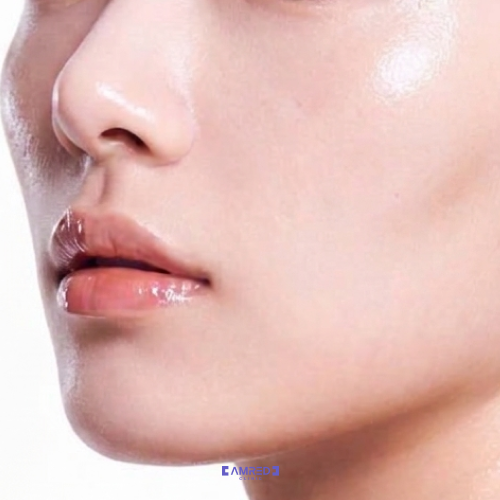
The flat appearance of the cheekbone from the front and the deep hollowness of the side cheek in a 45-degree photo may not be the same issue. The volume difference when smiling versus being expressionless can also be examined. Whether adding volume only under the cheekbone creates a natural facial contour or whether the original position and proportions of the cheek need to be considered will change the plan.
Causes for the flat appearance of cheekbones may involve actual volume loss as well as changes in the boundaries of the lower eyelid and side cheek areas. The difference in light and shadow in photos does not necessarily mean that one area is simply lacking in volume.
Even with the same photo, shadows can appear differently depending on lighting and angles, so it is advisable not to judge the cause based on just one image. In consultations, the overall shape of the face should be examined together.
While the front may show sunken cheekbones, the boundary between the lower eyelid and side cheek may be more concerning from the side view. In such cases, rather than just deciding how much to fill one point, it is essential to first check what impression differences arise from various angles.
What is Important in Cheekbone Fillers?
Injection procedures, such as hyaluronic acid fillers, vary in characteristics and usage by product. It is necessary to receive explanations about the types of products, injection amounts, target locations, and, although rare, serious vascular-related complications.
Hyaluronic acid fillers directly compensate for the volume of the injection area, while collagen-stimulating injections may show tissue reactions over time, indicating that the expected processes differ. It cannot be said that one method is inherently more natural or longer-lasting than another. Previous treatment history, the degree of desired change, and maintenance and management plans should be considered together.
There is no simple formula like 'a little filler will look natural.' It is important to evaluate the desired shape alongside the current facial structure and then assess whether an injection procedure is necessary.
Can Volume Treatments and Lifting be Considered Together?
When volume issues and skin elasticity decline occur together, different treatment approaches can be discussed. However, determining which is appropriate among Sculptra, fillers, and energy lifting requires individual assessment, and combining them does not guarantee better results.
Adding volume through procedures is not always the answer. If the volume in the central part of the face is sufficient but the lower tissues are sagging, making the cheekbones appear flat, the overall harmony of the face should be evaluated first rather than simply increasing volume. Conversely, in faces where actual volume loss is pronounced, achieving the desired three-dimensionality may be difficult with just skin tightening.
Will Filling Only the Cheekbones Change Facial Balance?
Focusing solely on the cheekbones may overlook the relationships with the side cheek, lower eyelid, and mouth corners. The proportions of the midface, the left-right balance of the face, and changes in appearance based on expressions should also be considered.
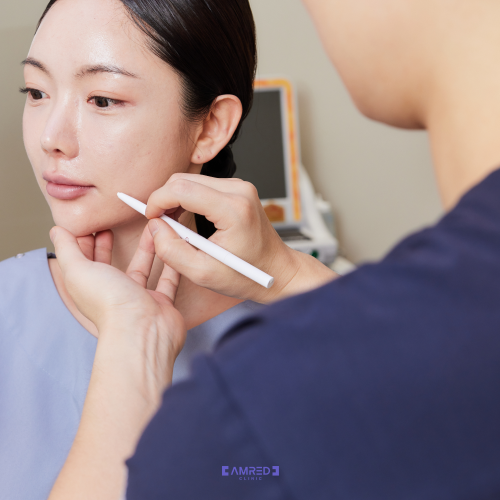
Procedures that involve injections into the face must consider not only bruising, swelling, asymmetry, and nodules but also more serious side effects related to the product and injection site. Especially for procedures close to facial blood vessels, assessing suitability and safety is crucial. Before the procedure, it is necessary to confirm the product name, injection area, predictable changes, and responses to adverse reactions.
The cheekbones connect to the three-dimensionality that extends from the lower eyelid to the midface. If only specific areas are prominently filled, the proportions with the side cheek and mouth corners may appear altered, making it important to consider the overall shape of the face.
How Does AMRED Assess Sunken Cheekbones?
The concern of sunken cheekbones is not simply a problem that can be solved by filling that area. Depending on whether the boundary between the lower eyelid and front cheek is prominent, whether there is an actual volume deficiency in the midface, or whether the surrounding shapes make it appear relatively flat, the approach may differ.
AMRED considers tissue density and volume, as well as the overall balance of the face, through 4D aging resolution. This is why, when reviewing the volume of the cheekbones, it is essential to distinguish between areas that need to be complemented for three-dimensionality and those that should maintain their current shape.
We evaluate whether injection procedures, including fillers, are suitable, and whether there are areas needing skin elasticity management, to review a treatment plan tailored to each individual face. AMRED's approach focuses on examining the harmony of the overall impression rather than just partial volume.
4D refers to a proprietary aging analysis and treatment design perspective defined by AMRED and does not signify an independent medical diagnostic classification or a single treatment name.
Actual treatment plans may vary based on the medical staff's assessment and individual conditions.
For booking inquiries, please contact us on WhatsApp.