
Cheongdam Titanium Lifting | What is Titanium Lifting? Features, Purpose, and Considerations
2026-10-28
Contents
What is Titanium Lifting?
Titanium Lifting (TITANIUM LIFTING) is known as a treatment that uses multiple wavelengths of laser energy. It is often mentioned in relation to concerns about skin elasticity, contour, and skin tone.
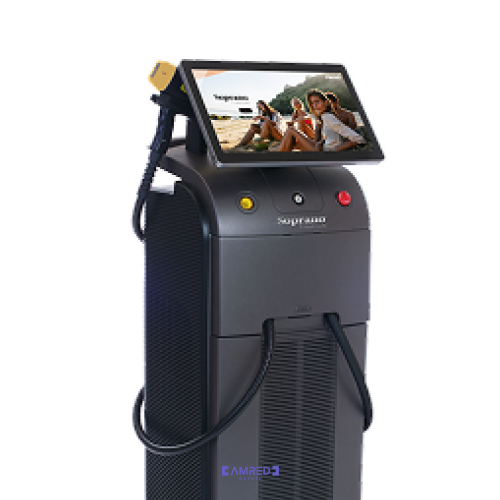
Titanium Lifting is a laser treatment that utilizes three wavelengths: 755nm, 810nm, and 1064nm, to address various skin concerns such as skin tone, elasticity, and facial contour. However, it is not possible to resolve all concerns simultaneously with a single treatment. The expected changes may vary depending on individual skin conditions and the areas one wishes to improve, so it is important to confirm whether the treatment is suitable for one's skin concerns.
One should not understand the term 'all-in-one' to mean that a single treatment can resolve all skin concerns. It is essential to first distinguish whether the necessary change is related to skin tone, elasticity, or contour.
It is important to specifically check the model of the equipment used, the treatment method, and the expected purpose.
What do the three wavelengths of Titanium Lifting mean?
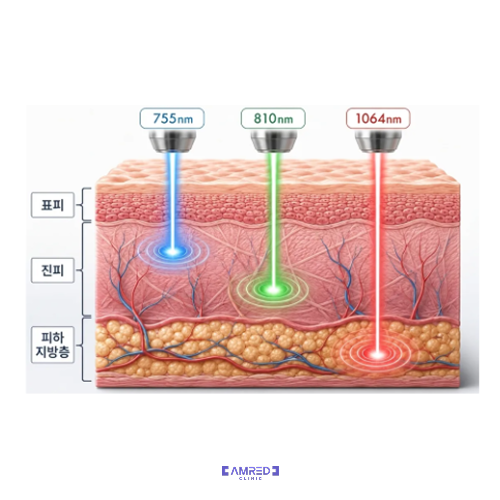
Titanium Lifting is based on a method that simultaneously irradiates three different laser wavelengths: 755nm, 810nm, and 1064nm. Each wavelength penetrates the skin to different depths, affecting different layers depending on the treatment purpose.
-
755nm wavelength: Acts on the upper layers of the epidermis and dermis, helping to improve elasticity and care for skin tone and texture.
-
810nm wavelength: Reaches the mid-dermis to assist with overall elasticity improvement and tightening effects.
-
1064nm wavelength: Penetrates to the deepest layers of the dermis and subcutaneous fat, responsible for heat transfer in deeper layers, aiding in lifting effects.
However, the mere fact that three wavelengths are used in combination does not guarantee that all skin concerns will be perfectly resolved or that it will demonstrate uniformly superior effects compared to other lifting methods.
Laser energy differs from high-frequency (RF) or ultrasound (HIFU) in its delivery method, and rather than guaranteeing independent treatment effects for each wavelength, the energy mode applied to the skin (such as STACK, SHR, etc.) and conditions must also be considered.
Additionally, while the Titanium equipment is equipped with a sapphire contact cooling system, its strong cooling function does not completely prevent all side effects or skin reactions. Individual responses may vary based on skin color, hair presence, and the condition of the tissues the energy reaches, so it is important to set appropriate modes and energies according to one's skin thickness and elasticity rather than relying solely on the 'three wavelengths' factor.
The characteristics of energy delivery and the approved purposes of use should be clearly distinguished, and one should not assume that specific tissues beneath the skin will be removed unconditionally.
Can skin tone and facial contour concerns be addressed together?
Concerns about a blurred facial contour and dull-looking skin may have different underlying causes. Even if it is introduced that one device can address multiple issues, the possible changes for each individual should be evaluated separately.
The change that makes the face look brighter and the change that makes sagging skin appear more organized are not the same concept. When skin tone is a concern versus when facial contour is a concern, it is advisable to specifically check which wavelengths and areas are the main targets.
Concerns about dull facial complexion and sagging skin leading to a blurred contour may have different causes. The explanation that one device can address multiple issues also changes meaning depending on what the actual goal is.
How does Titanium differ from Ultherapy and Thermage?
Unlike Ultherapy, which uses ultrasound, and Thermage, which uses high-frequency energy, Titanium is based on a laser method. The wavelengths of the device and the target tissues differ, so it is not easy to consider them as substitutes based solely on pain or cost.
The description of 'immediate return to daily life' cannot replace the recovery process in all cases. Redness, heat sensation, and irritation may occur on the skin, and rare cases of burns or pigmentation changes should also be considered. If there is an important shoot or event coming up, it is advisable to check previous experiences with laser reactions, whether the skin is in a sensitive state, and if post-treatment care is manageable.
The most concerning area may differ depending on whether it is elasticity, volume, or skin tone.
What are the pain and reactions during Titanium Lifting?
During the procedure, heat sensation or discomfort may occur, and reactions such as redness may arise depending on the skin condition. It is advisable to confirm the risks of skin pigmentation changes and thermal damage associated with laser treatments through the medical staff's explanation.
Titanium, Thermage, Ultherapy, and Tune are all grouped under the term lifting, but the principles of the equipment differ. Therefore, it is difficult to directly judge superiority by saying 'Titanium replaces Thermage' or 'Titanium goes deeper than Ultherapy.' Distinguishing whether my concern is related to skin tone, texture, elasticity, or contour clarifies the purpose when comparing with other devices.
If considering before an important shoot or event, it is advisable not to schedule based solely on reviews that state effects appear immediately. Checking expected skin reactions and care methods in advance will help in making a decision.
How does AMRED evaluate Titanium Lifting?
Titanium Lifting utilizes multiple wavelengths, but this does not mean that all facial concerns can be equally improved at once. Depending on whether the change in skin tone is the main concern or whether changes in skin elasticity or facial contour are more important, the goals of the treatment will differ.
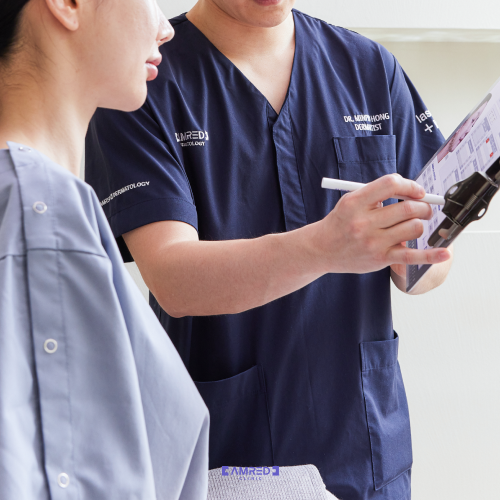
AMRED examines everything from surface detail changes to the condition of the skin and tissues, and the overall balance of the face based on 4D aging resolution. Through this distinction, we review which concerns are suitable for a laser-based approach and which require other energy methods.
Designing a treatment that clearly defines the necessary goals and application scope for the face, rather than just the number of wavelengths, is the standard by which AMRED views Titanium Lifting.
4D is a self-defined perspective of aging analysis and treatment design by AMRED, and does not refer to an independent medical diagnostic classification or a single treatment name.
Actual treatment plans may vary based on the medical staff's examination and individual conditions.
For booking inquiries, please contact us on WhatsApp.