
Cheongdam Dermatology | Reasons Why the Effect of Thread Lifting Varies Depending on Facial Condition
2026-10-30
Contents
What changes can you expect from Thread Lifting?
When the skin around the cheeks and mouth sags, the jawline can appear blurred, and the facial contours may look different from before. One method to improve this sagging is Thread Lifting.
Thread lifting is a procedure that involves inserting medical threads under the skin to support sagging tissues and move them in the desired direction. Unlike laser or radiofrequency lifting, which delivers thermal energy to the skin, it is characterized by directly adjusting the position of the tissue using threads.
It is primarily used to alleviate sagging in the cheeks or improve the blurred contours of the jawline. If the tissue around the cheeks has sagged, making nasolabial folds or the curves around the mouth appear deeper, methods to support the sagging tissue can be considered.
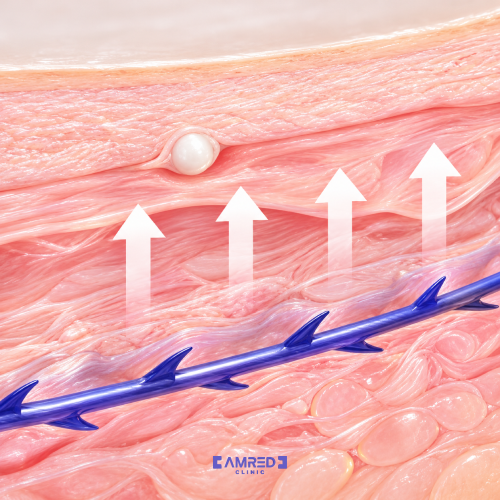
However, thread lifting does not improve all wrinkles or changes in facial contours. The expected effects can vary depending on the loss of skin elasticity, fat distribution, volume reduction, and the degree of sagging tissue.
In particular, thread lifting has a different purpose than procedures that directly fill in lost volume or remove sagging skin. Therefore, the changes that can be expected from thread lifting depend on the current condition of the face and the causes of sagging.
Does the effect of the same Thread Lifting vary depending on facial condition?
Even if the same thread lifting is performed, the changes that appear after the procedure can differ based on the thickness and elasticity of the skin, the distribution of fat tissue, and the degree of sagging.
For example, if the fat and soft tissue around the cheeks have sagged, causing the jawline to appear blurred, one might consider supporting the sagging tissue upwards to improve the facial line.
On the other hand, if the volume of the cheeks has decreased, making the face look hollow, the situation is different. In such cases, even if the tissue is moved upwards, the lost volume may not be restored, and depending on the direction in which the threads are pulled, existing hollowness or contour changes may become more pronounced.
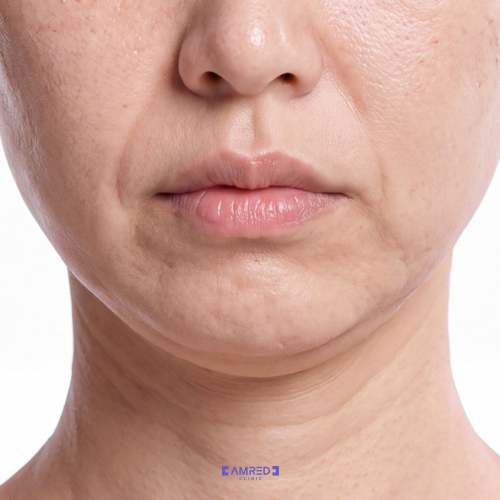
If the skin is thin or has significantly lost elasticity, the treatment plan will also differ. If the thickness of the tissue under the skin is insufficient, there is a possibility that the threads may be felt or the skin surface may appear uneven.
Conversely, if sagging is severe or the weight of the tissue is significant, it may be difficult to achieve the desired level of improvement with just the support of the threads.
Therefore, thread lifting should be assessed not only based on age or the degree of sagging but also by examining the condition of the skin and fat tissue, as well as the actual degree of tissue movement. Even with the same facial sagging, the suitability and expected effects of thread lifting can vary depending on the cause.
Are the procedures for cheek sagging and jawline changes performed in the same way?
Thread lifting requires different positions and directions for supporting the tissue depending on the area being treated. Therefore, when improving cheek sagging and jawline changes, the threads are not inserted in the same manner.
The area around the cheeks is where changes in fat and soft tissue position affect the three-dimensionality of the face. In particular, if the tissue in the midface descends, the nasolabial area and the curves around the mouth may appear more pronounced.
In such cases, it is essential to consider in which direction the descended tissue should be moved to maintain the existing volume and facial shape naturally.
In contrast, the jawline is the area that forms the boundary between the face and neck. If the skin and soft tissue around the jawline sag, the contours may appear blurred, and at this time, the position and direction for supporting the sagging tissue will be planned according to the shape of the jawline.
The threads used in thread lifting are also selected based on these treatment purposes. Some threads use protrusions formed on the surface to hold the tissue, while other types of threads differ in their structure and method of supporting the tissue.
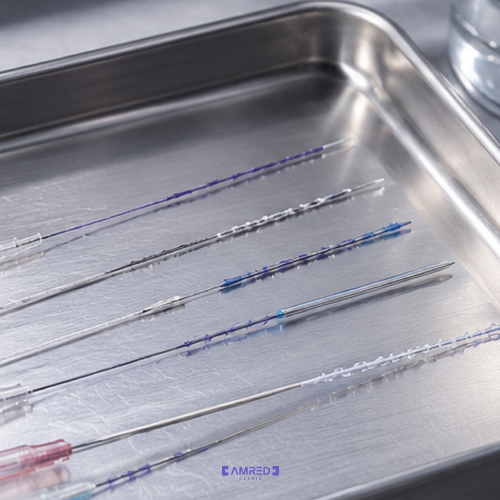
However, the type of thread alone does not determine the treatment effect. The area where the thread is inserted, the direction in which the tissue is moved, and how the surrounding fat and volume are maintained all influence the actual results.
Additionally, if the cause of the blurred jawline is primarily due to fat accumulation or the skeletal structure of the face, it may be challenging to achieve the expected contour changes with thread lifting alone.
Therefore, thread lifting should differentiate the causes of sagging that appear in different areas and plan the application method based on how much tissue can be moved.
When do the effects of Thread Lifting appear and how long do they last?
Thread lifting is a procedure that directly adjusts the position of the tissue using threads, so changes in facial contours can sometimes be observed immediately after the procedure.
However, immediately after the procedure, there may be swelling or temporary skin changes along with the pulling force on the tissue. Therefore, the appearance right after the procedure may differ from the facial contours after recovery.
As time passes and the initial swelling and tension subside, and the surrounding tissue settles, the changes in the facial line can be observed more stably. This recovery process varies depending on the type of threads used, the insertion site, and the individual's skin and tissue condition.
The duration of the effects of thread lifting also varies from person to person. The material and structure of the threads have different characteristics for decomposition in the body, and the degree of tissue sagging, weight, insertion position, and direction also affect the persistence of the effects.
In particular, the period during which the threads are absorbed in the body and the actual lifting effect lasts does not necessarily coincide. The force supporting the tissue changes over time, and the aging of the skin and soft tissue continues to progress.
Clinical studies have observed initial improvement effects of absorbable thread lifting, but research on whether the same lifting effect is maintained over the long term is limited.
Therefore, the duration cannot be determined solely by the specific material of the threads. The changes observed after the procedure, the condition of the tissue, and the changes in facial contours over time must be considered together.
What changes and precautions should be noted after Thread Lifting?
Thread lifting is a procedure that involves inserting medical threads under the skin, and temporary bruising, swelling, tenderness, and a pulling sensation in the skin may occur after the procedure.
In particular, when moving facial muscles, such as opening the mouth wide or smiling, the insertion site may feel tight or uncomfortable. These reactions can vary depending on the treatment area and insertion position, and generally, they can be alleviated during the recovery process.
However, it should also be considered that changes may appear on the skin surface during the process of the threads holding the tissue.
Commonly, dimpled appearances, asymmetry, and irregularities on the skin surface may occur temporarily. These can be influenced by the depth and direction of thread insertion and the force applied to the tissue.
Rarely, there may be phenomena where the threads are felt or exposed outside the skin, or complications such as infection or persistent inflammation may arise, requiring additional treatment.
During the initial phase of the procedure, it is advisable to avoid applying unnecessary pressure to the insertion site and to follow the medical staff's guidance regarding strong massages or excessive facial movements.
The duration of the recovery process and discomfort varies from person to person. However, if pain and swelling gradually worsen, or if there are abnormal changes in skin color or exposure of the threads, medical attention is needed.
How does AMRED design Thread Lifting based on facial condition?
Even when performing thread lifting on the same area, the expected changes can differ based on the thickness of the skin, the distribution of fat tissue, and the direction of sagging. AMRED examines the structure of the face and the condition of the tissue to plan the application area and direction of thread lifting.
For example, if the jawline appears blurred, it is not just a matter of pulling the tissue upwards; it is essential to examine where the skin and fat tissue have sagged from and how it relates to the existing shape of the jawline.
If cheek sagging is a concern, the volume and position of the midface tissue are also considered. Especially if there is a lack of volume in the front cheek or hollowness in specific areas, careful planning is necessary as the direction of tissue movement can change the three-dimensionality of the face.
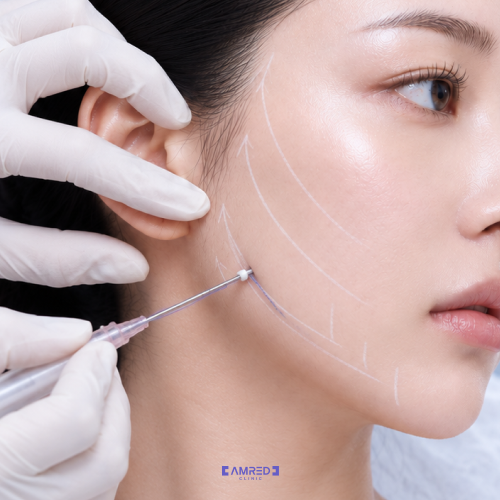
AMRED's 4D Aging Resolution is a perspective on treatment design that examines changes in the face not only at the skin surface but also in the condition of the tissue and the overall balance of the face.
It considers changes in skin and tissue density and volume (DENSITY), detailed changes such as wrinkles and sagging (DETAIL), overall facial contours and proportions (DESIGN), and changes over time and durability after the procedure (DURABILITY) to review the necessary direction for improvement.
Based on this, the areas where thread lifting can be applied, the direction of tissue movement, and the structure and number of threads to be used can be determined. Additionally, if there is a simultaneous reduction in facial volume or loss of skin elasticity, the limitations of thread lifting should be considered, and the need for other procedures should also be reviewed.
Even with the same thread lifting, if the condition of the skin and fat tissue and the causes of sagging differ, the treatment plan and expected results will also vary.
AMRED plans the application range and direction of thread lifting based on these differences, considering the individual facial structure and contours.
4D is a proprietary aging analysis and treatment design perspective defined by AMRED and does not refer to an independent medical diagnostic classification or a single treatment name.
The actual treatment plan may vary based on the medical staff's assessment and individual conditions.