
Cheongdam Dermatology | What is the Difference Between Juvelook Volume and Fillers for Nasolabial Folds? Principles of Improvement and Considerations During Treatment
2026-11-06
Contents
Why Do Nasolabial Folds Form and What Causes Them to Deepen?
Nasolabial folds are wrinkles that extend from the sides of the nose to the corners of the mouth, and they often become more pronounced with age.
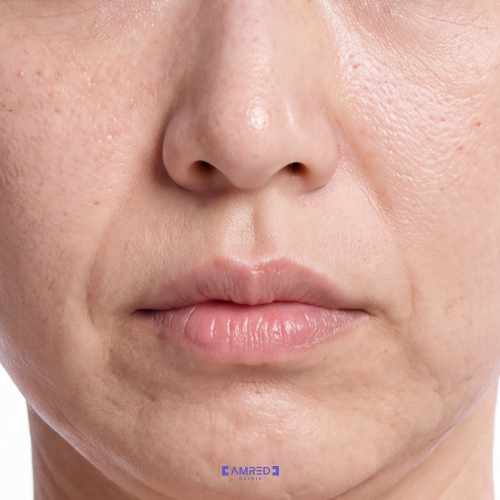
At this time, the skin's elasticity may decrease, making the folds more pronounced, or the volume of the midface, including the cheeks, may decrease, or the position of surrounding tissues may change, making the boundaries of the nasolabial area appear deeper.
In particular, the fat layer and supporting tissues of the face can change during the aging process. As a result, if the volume of surrounding areas decreases or shifts downward, the nasolabial folds may appear more prominent.
Therefore, it is difficult to determine the cause of nasolabial folds based solely on their visible depth. It is necessary to examine whether the folds on the skin surface are the main issue, whether changes in surrounding volume are affecting them, or whether there is accompanying tissue sagging.
Depending on these causes, the management methods that can be considered may also vary.
What is the Mechanism of Action for Juvelook Volume?
Juvelook Volume is a collagen-inducing product based on PDLLA and hyaluronic acid (HA). It is utilized in a way that considers both volume formation and collagen production through the characteristics of the injected formulation and the action of PDLLA.
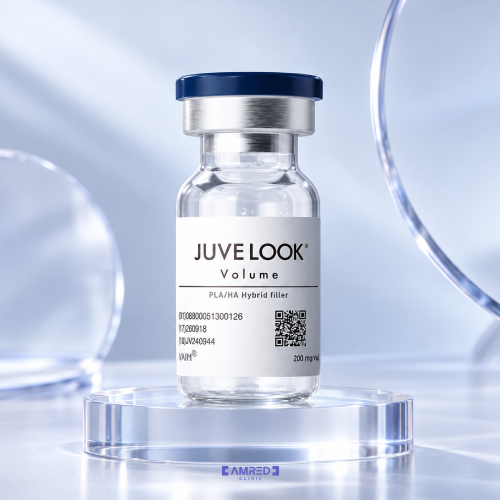
Thus, Juvelook Volume does not simply create immediate volume with the injected substance, but also considers changes related to collagen production that may occur over time.
However, it is important to distinguish between the changes that occur immediately after the procedure and those that occur over time due to collagen production.
Changes related to collagen production may take time to manifest, and the degree and nature of these changes can vary depending on the individual's skin condition and treatment conditions. Additionally, just because Juvelook Volume has the property of inducing volume formation and collagen production does not mean it can improve all types of nasolabial folds.
This is why it is essential to consider the causes of nasolabial folds and the condition of surrounding tissues.
How Do Juvelook Volume and Fillers Differ in Their Approach to Nasolabial Folds?
Both Juvelook Volume and fillers can be administered via injection, but there are differences in their mechanisms of action and intended purposes.
Fillers are a method that injects hyaluronic acid to immediately restore volume and shape to sunken areas. Therefore, they can be used to compensate for the lost volume in the nasolabial fold area.
On the other hand, Juvelook Volume is based on the collagen-inducing properties of PDLLA, considering both immediate volume changes and collagen production responses over time.
Category | Juvelook Volume | Filler |
|---|---|---|
Key Characteristics | Collagen induction through PDLLA | Volume restoration through hyaluronic acid |
Approach | Considers changes related to volume formation and collagen production | Restores shape and volume of the injection area |
Changes | Changes immediately after treatment and tissue responses over time need to be understood separately | Immediate volume changes can be observed right after injection |
Considerations | Condition of the skin and surrounding tissues, causes of volume deficiency | Degree of volume deficiency and surrounding contours |
Therefore, it is difficult to determine that one option is definitively more suitable than the other.
Just because nasolabial folds appear deep does not necessarily mean that fillers are needed, nor is Juvelook Volume suitable in every case.
The important thing is to understand the differences between the two treatments and to identify the causes that are currently making the nasolabial folds prominent.
What Should Be Considered When Considering Juvelook Volume for Nasolabial Folds?
When considering Juvelook Volume for the nasolabial fold area, the decision should not be based solely on the depth of the folds.

First, it is necessary to examine the volume status of the cheeks and midface, skin elasticity, and whether there is sagging of surrounding tissues.
For example, if the decrease in volume in surrounding areas is making the nasolabial folds more pronounced, or if tissue sagging is the primary cause, the approach may differ.
In particular, deep nasolabial folds may result from multiple structural factors acting in combination. In such cases, it is difficult to conclude that Juvelook Volume alone can sufficiently compensate for the depth or hollowness of the folds.
Additionally, specific treatment plans should consider factors such as the injection site, depth, and volume used.
Ultimately, whether Juvelook Volume can be applied cannot be determined solely by the presence of nasolabial folds. It is essential to assess the areas with volume deficiency, the causes, and the condition of surrounding tissues, as well as to consider the expected changes and limitations.
What Changes and Precautions Should Be Taken After Juvelook Volume Treatment?
After Juvelook Volume treatment, temporary swelling or bruising may occur at the injection site. The degree and duration of these reactions can vary depending on the individual's skin condition and the extent of the treatment.
Moreover, the volume changes observed immediately after treatment should not be interpreted as results of long-term collagen production.
Changes related to collagen production are a process that requires time, and the reactions and sensations can vary from person to person.
After treatment, it is important to follow the care instructions provided by the medical staff. If unusual pain or swelling occurs at the injection site, do not make arbitrary judgments and consult the medical staff.
The number of treatments and intervals should be planned individually, considering skin condition, treatment goals, and product usage guidelines.
What Does AMRED Consider When Performing Juvelook Treatment for Nasolabial Folds?
When planning Juvelook Volume treatment for nasolabial folds, AMRED examines not only the visible areas of the folds but also the causes that make the nasolabial folds prominent and the condition of the surrounding facial tissues.
This is because nasolabial folds can result from various factors, including decreased skin elasticity, changes in midface volume, and tissue sagging.
To assess these conditions, AMRED utilizes a 4D aging resolution perspective.
DENSITY: Examines the overall skin condition, including density and elasticity.
DETAIL: Checks detailed changes in shape, depth, and surrounding areas.
DESIGN: Plans the treatment direction considering surrounding volume and overall facial balance.
DURABILITY: Considers factors that may affect changes and maintenance after treatment.
Based on this analysis, it can be reviewed whether applying Juvelook Volume is appropriate or if a different approach is needed.
Since Juvelook Volume cannot improve all types of nasolabial folds, it is important to first confirm individual skin conditions and the causes of volume deficiency rather than deciding on the treatment itself.
Ultimately, AMRED prioritizes examining the individual's nasolabial fold condition and planning the appropriate treatment direction rather than making judgments based solely on the specific treatment of Juvelook Volume.
4D is a proprietary aging analysis and treatment design perspective defined by AMRED and does not refer to an independent medical diagnostic classification or a single treatment name.
Actual treatment plans may vary based on the medical staff's assessment and individual conditions.