
Cheongdam Laser | Differences Between Ultherapy, Thermage, Tune Face, and Titanium Lifting: How Should You Choose?
2026-10-20
Contents
Comparison of 4 Types of Lifting: Even if they are all lifting treatments, their mechanisms differ.
Ultherapy, Thermage, Tune Face, and Titanium Lifting are all treatments compared together due to concerns about skin elasticity and facial contours.
However, since the methods of energy delivery and the main considerations differ, it is difficult to group the four as the same 'lifting laser'.
Ultherapy Prime: A method that forms thermal coagulation points by focusing micro-focused ultrasound (MFU-V) on a target depth within the skin, verified through imaging.
Thermage FLX: A method that uses unipolar radiofrequency (RF) to heat tissues for the purpose of improving skin elasticity and wrinkles.
Tune Face·Tune Confier: A program that selects the appropriate application method and handpiece based on the area and purpose among Accent Prime's RF and ultrasound technologies.
Titanium Lifting: A laser-based method that simultaneously uses three different wavelengths (755·810·1064nm).
Therefore, when choosing a lifting treatment, it is helpful to first distinguish whether 'my concern is about skin elasticity, changes in fat/volume, or sagging facial contours' rather than which equipment is the most popular. Let's examine the differences of each treatment based on their principles and considerations.
Ultherapy Prime: Lifting that Confirms Target Depth with Ultrasound
Ultherapy focuses micro-focused ultrasound on a specific depth within the skin to create small thermal coagulation points, utilizing the resulting tissue response.
The equipment currently recommended by AMRED is 'Ultherapy Prime'.
The characteristic of Ultherapy Prime is that it allows planning of the application depth while confirming the tissue of the treatment area through ultrasound imaging technology (DeepSEE).
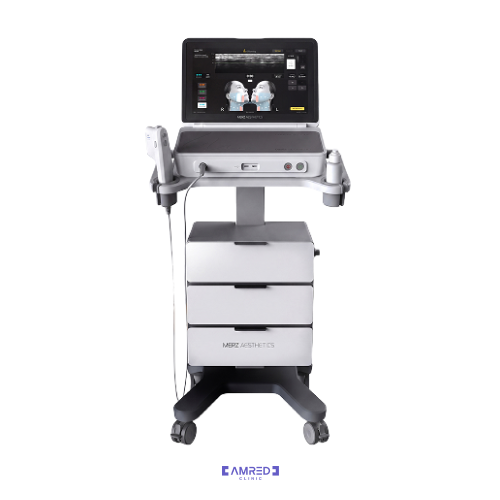
According to the manufacturer's data, transducers that correspond to different depths of 1.5mm, 3.0mm, and 4.5mm are used.
However, the same depth and amount of energy are not appropriate for everyone.
It can be considered when there are concerns about blurred facial contours or sagging skin, but since the amount of fat and thickness of the face, as well as the structure of different areas, vary, the treatment location and energy must be carefully designed.
Especially if there is less volume or concerns about hollowness in specific areas, it is important to first check the condition of that area rather than simply choosing a strong lifting treatment. When consulting about Ultherapy, it is advisable to consider which areas are targeted and how the tissue observed in the ultrasound image and the application depth are assessed.
Thermage FLX: Skin Elasticity Management Using Unipolar RF
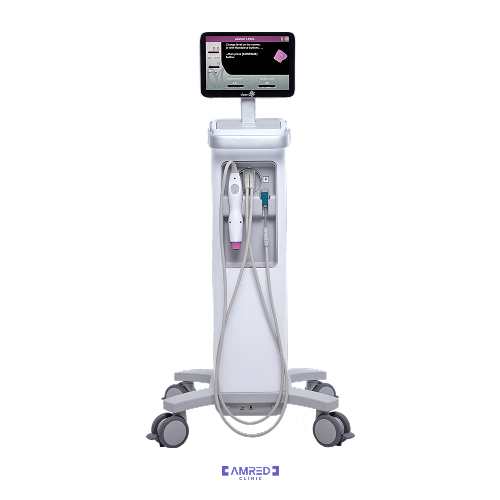
Thermage FLX is a treatment that uses unipolar radiofrequency (Monopolar RF) energy instead of laser.
It delivers heat to the tissues with radiofrequency and is used for concerns related to skin elasticity and wrinkles around the eyes and face. While Ultherapy focuses energy at a chosen depth, Thermage operates through a tissue heating method using radiofrequency, which distinguishes its mechanism.
However, it cannot be simply categorized as 'Ultherapy for sagging, Thermage for fine wrinkles'. This is because the actual condition of the face and the expected changes may overlap. Thermage can be considered when the skin appears generally loose or when both elasticity and wrinkles are concerns.
If changes in facial contours accompany the treatment, the possibility of combining it with other treatments can be discussed, but it cannot be concluded that using multiple devices will always enhance the effect. Consideration of the order and intervals between treatments, as well as the heat applied to the skin, is necessary. Therefore, if considering Thermage, it is advisable to first review which areas of elasticity and wrinkles are to be managed and whether other energy-based treatments are also needed.
Tune Face·Tune Confier: A Program That Adjusts Application Methods Based on Areas
Tune is a group of treatments based on the Accent Prime platform.
This equipment is equipped with radiofrequency (RF) and ultrasound (US) technologies, and the functions and handpieces used vary depending on the treatment purpose. Tune Face primarily refers to skin elasticity management using radiofrequency, while Tune Liner and others consider different technologies and application areas. Therefore, even if the name 'Tune' is the same, it is important to confirm which handpiece and method are actually being used.
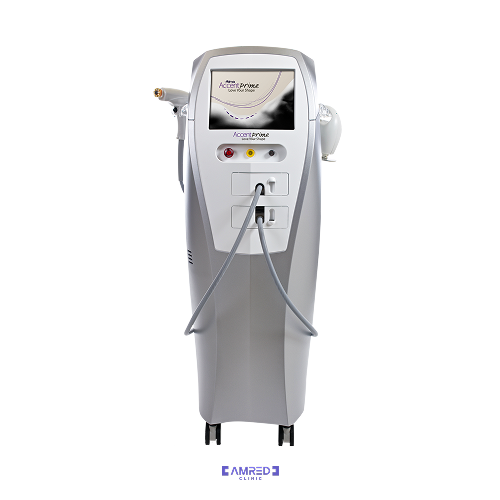
AMRED's 'Tune Confier®' is a customized Tune program designed to consider the facial areas and skin conditions based on these equipment characteristics. However, having various handpieces does not guarantee better results for a specific individual.
When comparing Tunes, it is useful to check what the actual handpiece and area to be applied are, as well as the treatment purpose, rather than just the name 'receiving Tune Face'.
Titanium Lifting: A Laser-Based Approach Using Three Wavelengths
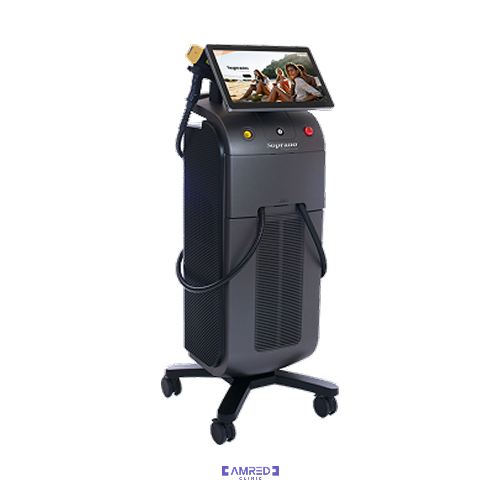
Titanium Lifting is a laser-based treatment method that utilizes the Alma Soprano Titanium equipment.
It simultaneously uses three wavelengths of 755nm, 810nm, and 1064nm, and features contact cooling technology. Unlike Ultherapy, which uses ultrasound, and Thermage and Tune Face, which use radiofrequency, Titanium is distinguished by its use of laser energy.
Depending on the skin condition and purpose, changes related to elasticity and skin appearance can be considered, but there is no evidence to generalize that it acts uniformly on all skin layers or lifts the fascia and periosteum. Additionally, even with cooling technology applied, it cannot be said that there is no pain or skin reaction at all.
Skin type, previous treatment history, and irradiation conditions should be considered together. If considering Titanium, it is important to distinguish whether the expected change is related to skin elasticity or changes in facial appearance and to discuss the application range and precautions of the equipment with the medical staff.
So, how do I decide which lifting is right for me?
When comparing treatments, it is better to examine the nature of the concerns rather than first looking for 'the strongest equipment'.
First, distinguish whether the skin feels thinner and less elastic, or if the volume of the face has decreased or its position has changed.
Second, check whether the concern is about fine wrinkles in localized areas like around the eyes, or changes in facial shape such as the jawline and cheeks.
Third, consider the previous treatments received, subsequent skin reactions, the degree of desired changes, and the timing of management.
For example, the same 'cheek sagging' can be influenced by both decreased skin elasticity and changes in fat/volume.
In this case, it is not always correct to say that one of Ultherapy, Thermage, Tune, or Titanium is the answer. You may consider only one treatment, or it may be appropriate to postpone treatment and observe the progress.
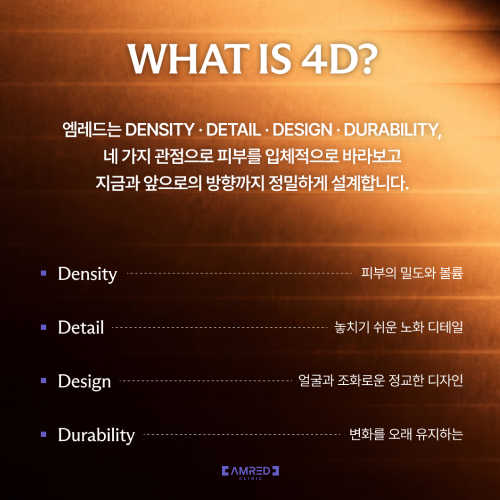
AMRED uses a 4D standard to explain these differences, examining the skin at four depths (epidermis, dermis, fat, fascia) from the perspectives of Density, Detail, Design, and Durability.
4D is a proprietary aging analysis and treatment design perspective defined by AMRED and does not refer to an independent medical diagnostic classification or a single treatment name.
Actual treatment plans may vary based on the medical staff's diagnosis and individual conditions.