
Cheongdam Dermatology | Emface Effects, What Changes Can You Expect?
2026-11-23
Contents
Can Emface Manage Skin Elasticity and Texture?
Emface is a non-invasive lifting procedure that manages both skin and facial muscles by combining radiofrequency (RF) and HIFES technology. It works by managing skin tissue with radiofrequency energy while inducing contractions in facial muscles through HIFES.
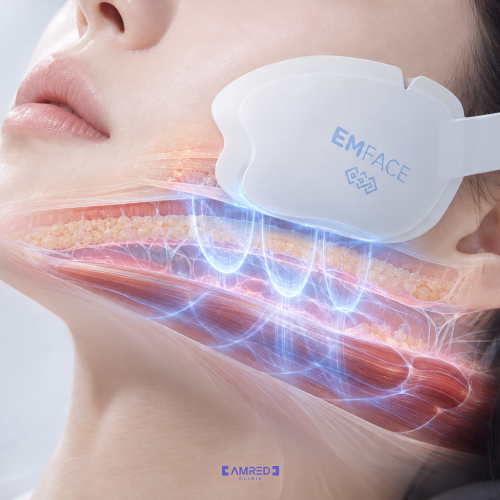
Among these, radiofrequency (RF) delivers thermal energy to skin tissue, inducing changes related to skin elasticity and helping to improve skin tone and texture.
When skin elasticity decreases, the facial contours may appear less defined, or the skin surface may feel uneven. Therefore, Emface is characterized by its ability to manage not only skin elasticity but also tone and texture.
However, the expected changes may vary depending on skin condition, degree of aging, and individual responses. Thus, it is important to first assess what changes are prominent in the current skin and to set specific management goals.
How Does Emface Stimulate Forehead Muscles to Change the Impression Around the Eyebrows and Eyes?
Emface's HIFES technology induces contractions in facial muscles. The forehead muscles are involved in the movement and position of the eyebrows, so the condition of these muscles can affect the impression of the upper face, including around the eyes.
For example, if there is a difference in the left and right movements of the forehead muscles, the height or shape of the eyebrows may appear different.
Emface is characterized by its ability to directly stimulate the forehead muscles, allowing for management that considers these movements.
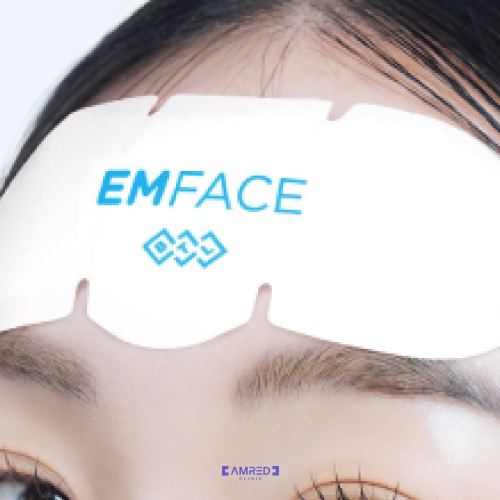
Therefore, if you are concerned about the impression around the eyebrows and eyes, you may consider an approach that examines not only skin elasticity but also the condition of the muscles in that area. However, the position of the eyebrows and the shape around the eyes are influenced by various factors such as facial structure and skin condition, so the applicability and expected effects may vary by individual.
Can Emface Stimulate Mid-Facial Muscles to Manage Facial Impression and Balance?
In the mid-face, it is possible to directly stimulate the facial expression muscles to examine muscle tone and balance. The facial expression muscles are involved in facial movements when smiling or speaking, and differences in left and right movements or muscle conditions can affect the impression when making expressions.
Emface considers the muscles that move and support the face from the upper to mid-face. In particular, examining the condition of the mid-facial expression muscles can be a choice for managing the muscle movements and left-right balance in that area. This can help to enhance the clarity and firmness of the mid-facial impression.
However, facial impression and balance are influenced not only by muscles but also by skin elasticity, fat distribution, skeletal structure, and individual facial proportions. Therefore, the management direction may vary depending on which part of the mid-face is prioritized for examination.
How Can Emface Be Used to Improve Facial Asymmetry?
Facial asymmetry can arise from various factors, including differences in the movements of left and right muscles, skeletal structure, fat distribution, and the condition of the skin and tissues. The manifestation of asymmetry, such as differences in eyebrow height or variations in the movement of the mouth corners when smiling, can differ from person to person.
Especially if the left-right difference is more pronounced when smiling or making expressions than when at rest, it is necessary to examine not only the size or contour of the face but also the patterns of muscle movement on both sides. This is because the areas where differences appear and the side with more pronounced movement differences may require different considerations.
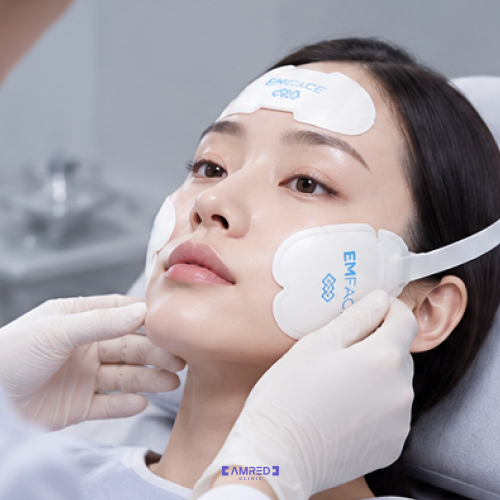
Emface can plan the design and attachment locations of patches considering the characteristics of each facial area and muscle movements. Therefore, even if you are concerned about asymmetry, rather than approaching both sides in the same way, you can check the movements and characteristics of each side and consider different application plans based on which areas to focus on.
However, not all facial asymmetry arises from differences in muscles. If skeletal structure, fat distribution, or tissue differences are the main causes, it may be difficult to expect desired changes through muscle stimulation alone. It is important to first identify the causes of asymmetry and the characteristics of each area to determine whether Emface can be applied.
How Does AMRED Plan the Emface Procedure?
AMRED examines the condition of skin elasticity and facial muscles during the Emface procedure to set improvement directions tailored to individual aging patterns. The necessary approaches may vary depending on the causes of concerns such as decreased skin elasticity, changes in muscles, and volume loss.
The criteria used at this time are the 4D aging resolution, which examines the depth and density of the skin, detailed changes, facial shape and balance, and durability over time.
Based on this, the necessity of applying Emface and the improvement goals are reviewed, and if appropriate, a plan is established according to the individual's condition and treatment objectives. After the procedure, the progress of changes is monitored, and necessary maintenance directions are considered.
4D is a proprietary aging analysis and treatment design perspective defined by AMRED and does not refer to an independent medical diagnostic classification or a single treatment name.
Actual treatment plans may vary based on the medical staff's examination and individual conditions.
👉Curious about the number of Emface treatments?
How many sessions of Emface are recommended? If you are curious about the number of treatments and plans based on individual skin conditions and management goals, please check the related column for more details.