
Cheongdam Onda Lifting | Reasons Why You Shouldn't Just Examine Double Chin and Submental Fat
2026-11-02
Contents
Why does a double chin appear prominent even without weight gain?
Double chin is not just a change that occurs when weight increases. The amount and distribution of fat under the chin, skin elasticity, and the structure connecting the chin and neck all work together to make the area under the chin appear fuller.
Even with the same amount of fat, the facial contour can appear differently depending on where it is concentrated.
If fat is concentrated in the center under the chin, it may appear round and heavy, while if fat is distributed along both sides of the jawline, the lower part of the face may appear wider. Therefore, when examining a double chin, it is important to consider not only the amount of fat but also its distribution and shape.
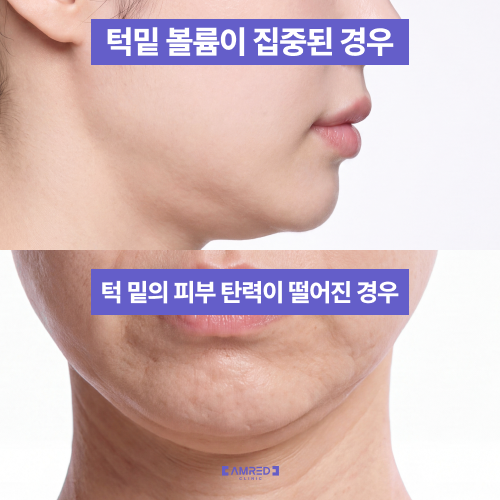
Skin elasticity is also an essential factor. Even if there is not much fat under the chin, if the skin is loose, the boundary between the chin and neck may not be clear. Conversely, even if skin elasticity is relatively maintained, if fat is concentrated in specific areas, the double chin may appear more pronounced.
Thus, while the visible double chin may look similar, the causes can be different. The management approach should vary depending on whether the amount of fat is the primary cause, whether skin sagging is also present, or whether the structure connecting the chin and neck is influencing the appearance.
How does Onda Lifting work on double chin?
Onda Lifting is a treatment that utilizes microwave energy to deliver energy to specific areas of the face and body, inducing a thermal response in the tissues. In managing double chin, the distribution of fat under the chin and the condition of the skin are considered to determine the applicability and treatment plan.
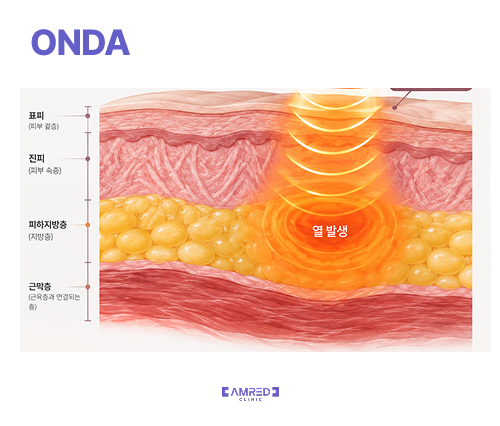
The double chin area is not very large and is located at the boundary where the jawline connects to the neck. Therefore, rather than approaching the entire area under the chin uniformly, it is essential to examine the location where fat is concentrated and the surrounding contours. Especially if the distribution of fat differs between the center and the sides, it is crucial to plan according to the condition of each area.
However, receiving Onda Lifting does not mean that all double chins will improve in the same way. The approach may differ depending on whether the thickness under the chin is pronounced due to fat or if skin elasticity reduction is the primary cause. When considering treatment, it is essential to first distinguish what factors are forming the current visible contours.
Additionally, the degree and timing of changes after treatment can vary based on individual tissue conditions and treatment plans. Rather than expecting the same results from a specific number of sessions or a single treatment, it is necessary to thoroughly discuss with medical professionals what changes can be aimed for based on the current condition.
How much fat should be reduced with Onda Lifting for double chin?
In managing double chin, it is important to set an appropriate management direction considering the harmony of the overall facial contour rather than simply reducing fat as much as possible.
If a wide area is uniformly managed just because there appears to be a lot of fat under the chin, it may create contours that do not match the original face shape. Those with pronounced volume in the center under the chin and those with fullness extending to both sides of the jawline may require different approaches. This is why plans should be differentiated based on the location of fat accumulation and the condition of surrounding tissues, even if the concern is the same double chin.
Particularly, the area under the chin is where the boundary between the face and neck is formed. Judging solely based on the volume in this area may not adequately consider the balance of the face shape seen from the front or the jawline extending from the side. This is why it is essential to examine the contours from not only the front but also the side and oblique angles.
Therefore, managing double chin with Onda Lifting should start by identifying which areas make the current face shape appear blurred rather than just focusing on reducing the amount of fat. The range and intensity of management should also be carefully determined according to individual conditions and goals.
Should skin elasticity also be considered in double chin management?
The causes of a prominent double chin are not solely due to fat, so skin elasticity and sagging should also be examined.
Reducing fat under the chin and tightening the skin are two different issues. If the volume of fat is the primary cause, the approach can focus on the fat condition in that area, but if the skin is loose and the boundary between the chin and neck is blurred, a plan considering skin condition is necessary.
At this point, it is crucial not to judge fat and skin separately. In reality, fat distribution, skin elasticity, and the shape of the tissues under the chin work together to create a single contour. If the treatment direction is determined based on only one factor, there may be a discrepancy between the expected changes and the actual results.

When considering Onda Lifting, it is necessary to distinguish whether the current concern is primarily fat, skin elasticity reduction, or a combination of both. It is essential to confirm not only whether the treatment is suitable but also what changes and limitations can be expected.
Depending on the skin condition, it may be challenging to expect the desired improvements with Onda Lifting alone. In such cases, it is advisable to review whether there are other management methods suitable for the current condition rather than proceeding with treatment excessively.
How does AMRED plan Onda Lifting for double chin management?
AMRED does not determine the treatment direction solely based on the amount of fat under the chin when planning Onda Lifting for double chin management. We examine the location and distribution of concentrated fat, skin elasticity, and the contour connecting the jawline to the neck to distinguish the causes of the current prominent double chin.
For example, if fat is concentrated in the center under the chin versus if volume extends to both sides of the jawline, the range of management may differ. Additionally, whether the volume of fat is the primary cause or if skin elasticity reduction is also present should be reviewed to determine the direction of Onda Lifting application.
Since Onda Lifting utilizes microwave energy, it is crucial to establish the application areas and treatment plans based on individual tissue conditions and goals. Rather than uniformly managing the entire area under the chin, it is essential to consider the distribution of fat and the condition of the surrounding skin, distinguishing the necessary areas and examining the overall contour connecting the jawline and neck.
AMRED utilizes a 4D aging resolution as a standard for treatment design to distinguish these differences. We review the density and volume of the skin and tissues (DENSITY), detailed aging changes (DETAIL), and the overall balance of the face (DESIGN) to assess the necessary improvement direction for each individual.
Based on this, we plan the application areas and treatment range of Onda Lifting according to the distribution of fat under the chin and skin condition, considering the natural continuity of the overall facial contour after treatment.
Managing double chin with Onda Lifting is not merely about reducing fat under the chin; it is a process of identifying the different causes of double chin for each individual and considering the overall balance of the face. AMRED meticulously examines individual tissue conditions and contour differences based on this 4D perspective to plan treatments.
4D is a proprietary aging analysis and treatment design perspective defined by AMRED, and does not refer to an independent medical diagnostic classification or a single treatment name.
Actual treatment plans may vary based on the medical professionals' assessments and individual conditions.