
ONDA in Cheongdam | 10 kJ vs. 40 kJ: Energy, Treatment Areas and Expectations
2026-11-10
Contents
What Can You Expect from 10 kJ of ONDA?
When looking into ONDA, you may come across energy levels such as 10,000 J, 40,000 J or 80,000 J. A common question is whether 10,000 J alone can produce a change.
For ONDA, 10,000 J equals 10 kJ. A joule (J) is a unit of energy, and 10,000 J can be written as 10 kJ.
So, what kind of changes can be expected with 10 kJ?
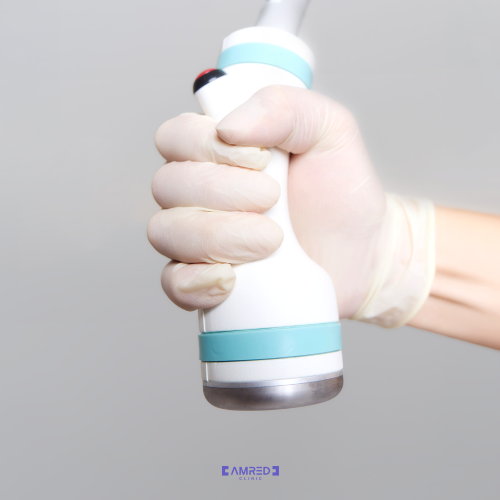
ONDA can be applied to areas of concern such as under the chin or around the jawline. However, it is difficult to predict treatment results based solely on the total energy in joules. The treatment area differs between cases where fat is concentrated under the chin and cases where fat extends around the jawline, and the treatment plan may also vary depending on the skin's elasticity.
Therefore, rather than judging how much effect can be expected from 10,000 J based on numbers alone, it is important to check whether the treatment amount is appropriate considering the current areas of concern and tissue condition.
How Do Treatment Areas Differ Between 10 kJ and 40 kJ of ONDA?
10,000 J of ONDA corresponds to 10 kJ, while 40,000 J corresponds to 40 kJ, resulting in a fourfold difference in total energy.
This difference can affect the treatment range and how energy is distributed. The required energy may differ depending on whether the focus is on a specific area or if multiple areas, from under the chin to around the jawline, are being managed together.
For example, if the main concern is a specific area under the chin, it may be considered to concentrate energy in that area. On the other hand, if fat is distributed from under the chin to around the jawline, a plan may be needed to distribute energy across multiple areas.
Although 40 kJ is four times as much total energy as 10 kJ, that does not mean treatment effects are four times as large. Where the energy is distributed, and how much is delivered to each area, matters.
Ultimately, determining which is more suitable between 10,000 J and 40,000 J should be based on considering the areas and range to be managed, as well as the individual's fat distribution, rather than just comparing energy amounts.
Is One ONDA Session Enough?
When considering ONDA treatment, you may wonder whether one session is sufficient or if additional sessions are needed.
It is better to decide the number of sessions based on the treatment goals and current condition rather than setting it from the beginning. The plan for the first session may vary depending on how concentrated the fat is and the treatment area.
After the first session, it is necessary to observe what changes actually occurred. After checking how much progress has been made towards the initially set treatment goals and whether there are additional areas to consider, the need for further sessions can be evaluated.
Repeated treatments are not necessarily required for everyone. Conversely, whether one session is sufficient can also vary depending on the individual's condition and treatment goals.
Therefore, rather than adhering to a predetermined number of sessions, it is important to clarify the purpose of the first session and then assess the progress to decide on the need for additional sessions.
How Should Changes and the Duration of Results Be Assessed?
After ONDA treatment, you may be curious about what changes occur in the contours of the chin and jawline and how long those changes last.
Changes after treatment can vary depending on individual fat distribution, skin condition, treatment area, and treatment plan. Even with the same amount of energy applied, not everyone will experience the same changes.
Therefore, rather than judging results based solely on the appearance immediately after treatment, it is advisable to observe the subsequent progress as well. It is necessary to compare the state before and after treatment to check whether the changes align with the initially set treatment goals.
The duration of results is also difficult to determine based solely on a specific amount of energy or number of sessions. This is because it can vary depending on the individual's tissue condition, treatment plan, and subsequent progress.
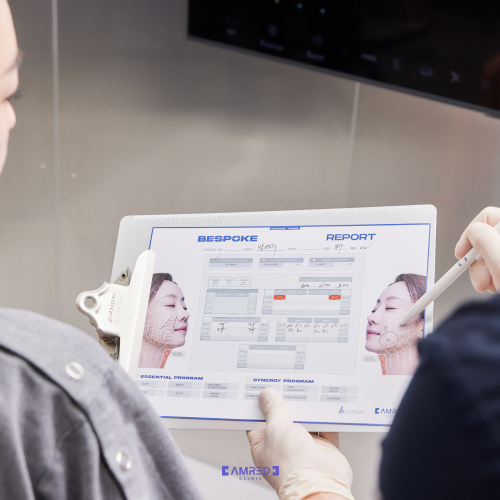
Rather than using someone else's number of sessions or duration of results as a standard, it is better to check the progress based on your own condition and, if necessary, discuss further care options with medical professionals.
How Does AMRED Plan ONDA Treatment Energy?
At AMRED, we do not base the amount of ONDA treatment solely on the total energy in joules. We examine the overall fat distribution of the face, skin elasticity, and contour balance to plan the treatment areas and range.
For example, the treatment area may differ between cases where fat is concentrated under the chin and cases where fat extends from under the chin to around the jawline. Additionally, if the amount of fat is low and skin elasticity is the main concern, it is important to consider the overall volume balance of the face rather than focusing solely on fat reduction.
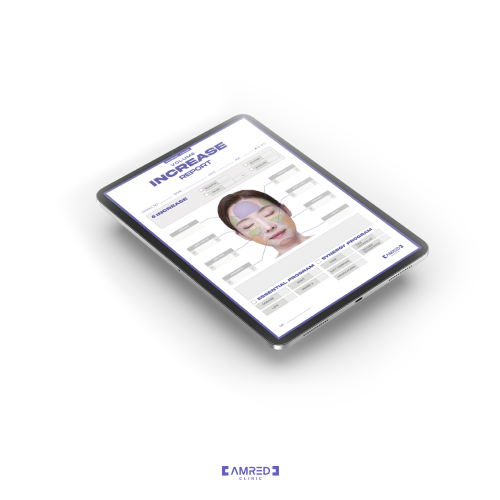
This treatment design reflects AMRED's 4D aging-analysis framework. It considers the density and elasticity of skin tissue (DENSITY), detailed changes such as fine lines and skin texture (DETAIL), overall facial balance (DESIGN), and changes and durability after treatment (DURABILITY).
Based on this, we distinguish the areas to manage fat and the areas where facial volume should be maintained, and plan the range and amount of ONDA treatment according to the individual's facial condition and treatment goals.
Ultimately, rather than first determining which number, 10,000 J or 40,000 J, is better, it is important to examine which areas of the face need to be managed and to what extent.
AMRED plans the necessary treatment amount based on the facial condition and treatment goals rather than adhering to a predetermined total energy in joules.
4D is a proprietary aging analysis and treatment design perspective defined by AMRED and does not refer to an independent medical diagnostic classification or a single treatment name.
The actual treatment plan may vary depending on the medical professional's examination and individual condition.
AMRED is a premium private skin clinic in Cheongdam, Seoul. We offer English-language support for consultations, appointments and post-treatment care guidance. Share your skin concerns and travel dates with us, and our team will help you arrange your consultation and visit.
For booking inquiries, please contact us on WhatsApp.